What is Financial Stress? A Guide to Finding Financial Peace
What is financial stress? It’s not even only about the empty bank account. It’s that heaviness of that constant, nagging worry about the bills and debt that follow you wherever you go. Even for those with full-time work, many experience these same pressures as increasing expenses and surprise costs erode their sense of security. If you have the sense that you’re running to stand still, you’re not alone. This guide gives you clear answers, so you can finally see: the common signs of financial anxiety, what’s behind it all and practical methods to ease that troubled mind… for good.
What is Financial Stress? A Clear Definition
Financial stress describes the negative feeling, physical and psychological reactions one experiences from money problems. It tends to rear its ugly head when you spend more money than you make, when you have no idea about what your financial future holds, or when you feel like someone else is calling the shots with respect to your money. But that’s not just a problem for people of very low income: Anybody can fall into that trap, from students with loan obligations to families trying to save enough for a down payment on a home. The root of that financial stress is a constant feeling of being overwhelmed by it, and that creates many daily feelings of fear and shame and pressure.
Why Is Financial Stress So Common Today?
Money stress is an epidemic today because the demands of modern life are costly – not to mention unpredictable. Things like housing, food and health care — the cost of which often increase faster than wages — can make people feel as if they are falling behind. Throw in the social pressure to drop cash on new experiences and trends of the moment, and it’s little wonder that budgets are stretched.
In addition, most people are never given any basic money management training. Surgery and the small financial hiccup When you don’t understand your budget, how to save or invest then a few minor financial hiccups can become overwhelming. Put those two forces — economic stress and ignorance of personal finance —and you get money-related anxiety as a daily fact or life for millions.
A lack of financial literacy is a major contributor to financial stress. Without a clear understanding of budgeting, saving, and investing, small financial problems can quickly spiral out of control.
Key Signs of Financial Stress You Shouldn’t Ignore
Financial stress often builds gradually, making it easy to dismiss until it starts to seriously affect your health and daily life. Recognizing the early signs is the first step toward regaining control.
Here are some common signs you might be experiencing financial stress:
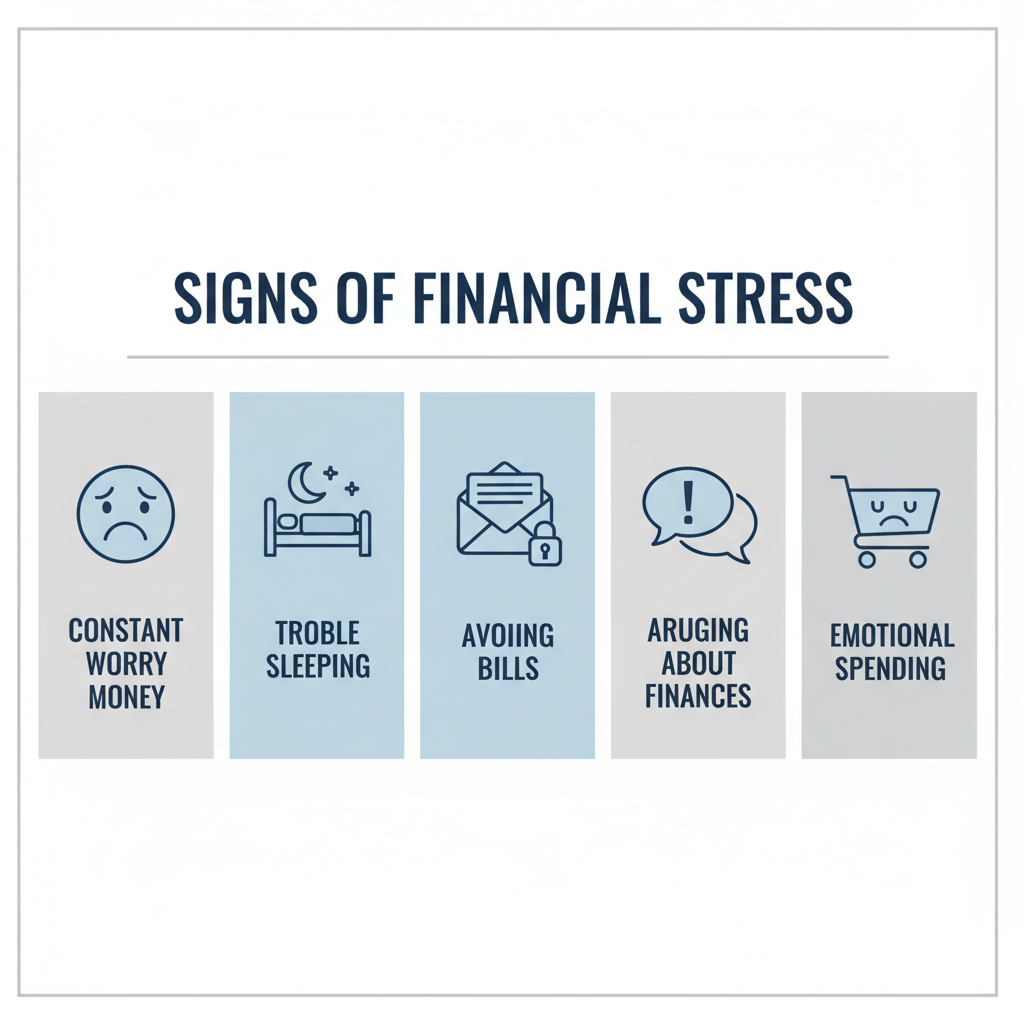
Constant Worry About Money: You find yourself thinking about bills, debts, or expenses frequently, even when nothing is immediately due. This ongoing worry can make it difficult to relax or enjoy other aspects of your life.
Trouble Sleeping or Feeling Anxious: Money concerns can keep your mind racing at night, leading to insomnia, headaches, and a general sense of anxiety.
Avoiding Your Finances: You put off checking your bank account, ignore bills, or avoid creating a budget. This avoidance is often a sign of feeling overwhelmed by financial pressure.
Arguing About Money: Frequent disagreements with a partner or family member about spending, saving, or financial priorities are a strong indicator of underlying financial stress.
Feeling Stuck: Despite working hard and earning an income, you feel like you are not making any financial progress. This sense of frustration is a key symptom of money-related stress.
Making Emotional Spending Decisions: Stress can trigger impulse buys or poor financial choices as a temporary way to escape the pressure you feel.
The Main Causes of Financial Stress
Financial stress rarely stems from a single cause. It’s usually a combination of income issues, high expenses, debt, and unexpected life events.
Low or Unstable Income
Low income is one of the leading causes of financial stress. When you’re living paycheck to paycheck, there’s no cushion for errors or emergencies. A car repair or medical bill out of the blue can set off a full-blown crisis. Unpredictable income, which is endemic among freelancers and workers in the gig economy, only adds to the challenge. The insecurity of not knowing exactly how much you will earn next month can make stress levels consistently high. Where this is you, it’s important to have an elastic budget. You can find useful ideas in our guide to budgeting tips for freelancers.
For those struggling with financial stress, the Consumer Financial Protection Bureau offers free resources and tools to help you create a budget, manage debt, and build financial stability.
The Rising Cost of Living
The cost of living keeps rising. The cost of rent, groceries, transportation and health care goes up each year, but wages barely do. Increasing that gulf drives people to fall back on credit cards just to get through the day. This can lead to a challenging cycle of debt and financial misery that seems impossible to escape.
The Heavy Weight of Debt and Loans
Millions are struggling under the weight of debt. Credit card balances, student loans and personal loans all carry with them monthly payments and interest that can grow the balance. That pressure of obligations is draining not only to your bank account, but also emotionally. People often feel shackled — or even embarrassed — by their debt, and that may cause them to avoid acknowledging it until the problem is insurmountable. If you’re feeling overwhelmed, just taking some small, organized steps can lead to big changes. Our step-by-step guide to paying off credit card debt can help you create a manageable plan.
Common Symptoms of Financial Stress
The symptoms of financial stress can manifest in emotional, physical, and behavioral ways. Learning to spot them early can help you take action before they cause long-term harm.
Emotional Signs of Money Worries
Mentally, feelings of financial stress can manifest as a never-ending concern, anxiety and dread about what’s coming. You might feel hopeless or that even tiny money-related decisions set off anxiety. Guilt and shame Feeling this way is a normal human reaction when thinking about the fact that even if you’re not doing great, it could be worse. Such psychological weight can, in turn, lead to more severe mental health problems, such as depression. Changing the way you think about money is transformative. Explore some money mindset exercises to start changing your perspective.
Physical Signs Your Body is Stressed About Money
Financial stress isn’t just in your head; it wreaks havoc on your body. Physical symptoms such as headaches, stomach woes, muscle tension and poor sleep are common. Long-term stress will leave your body in a “fight or flight” state, which may drain your immune system. You may, then, be getting sick more frequently or feeling persistently exhausted.
Chronic stress can take a toll on your body, leading to headaches, muscle tension, and fatigue. The Mayo Clinic offers practical tips for managing stress and improving your overall well-being.
The Ripple Effects of Financial Stress on Daily Life
Financial stress spills over into every corner of your life, impacting your mental health, relationships, and even your job.
Impact on Mental Health and Well-being
The connection between financial strain and mental health is well-established. Money is the leading cause of stress for most adults, according to the American Psychological Association. Continuing money concerns raise the risk of anxiety disorders and depression. It can also damage your ability to concentrate and remember. In worst case scenarios, it can result in a kind of burnout or unhealthy compensation.
How Financial Stress Impacts Relationships
Money is one of the most frequent sources of conflict in relationships. Financial pressures can cause partners to argue, assign blame and grow further apart. Arguments might develop around how to spend money, where to save it and what to do about debt. For parents, there may be an extra layer of guilt if they believe they aren’t doing enough for their children. Open and transparent talk should be the foundation of dealing with these issues as a couple.
Financial Stress Across Different Life Stages
Financial pressures change as we move through different phases of life. Each stage comes with its own unique set of responsibilities and challenges.
Students and Young Adults
Tuition fees, rent and the struggle of juggling studies with a part-time job are often big financial stresses for students. No little squalling ball of joy, students may instead find themselves with crushing debt in the form of student loans. Young adults entering the work force also are under pressure to meet or exceed financial expectations early on in life, a sentiment commonly exacerbated by FOMO, or fear of missing out that often spurs overspending thanks to rampant social media comparisons.
Families and Parents
For parents, money stress frequently centers on the high price of child care, education and housing. An unexpected expense, such as a child who requires braces, can throw a carefully crafted budget off balance. Balancing short-term obligations to the family and long-term aims such as retirement saving is a constant juggling act.
Retirees and Seniors
Retirees are frequently concerned about outliving their savings. Fixed incomes, and increasing costs of health care as well as inflation are major causes of stress. Good retirement planning can alleviate such anxiety, but many people start too late or do not know where to begin.
How Financial Stress Affects Your Performance at Work
Financial anxieties don’t go away when you punch in for work. A person who is worried about debt or bills generally will not be the person with focus, motivation and productivity on any given day. It can result in missed deadlines, decreased quality of work, and even sick leave caused by stress related illnesses. Continually underperforming can prevent you from moving ahead in your career.
Healthy vs. Unhealthy Financial Stress: What’s the Difference?
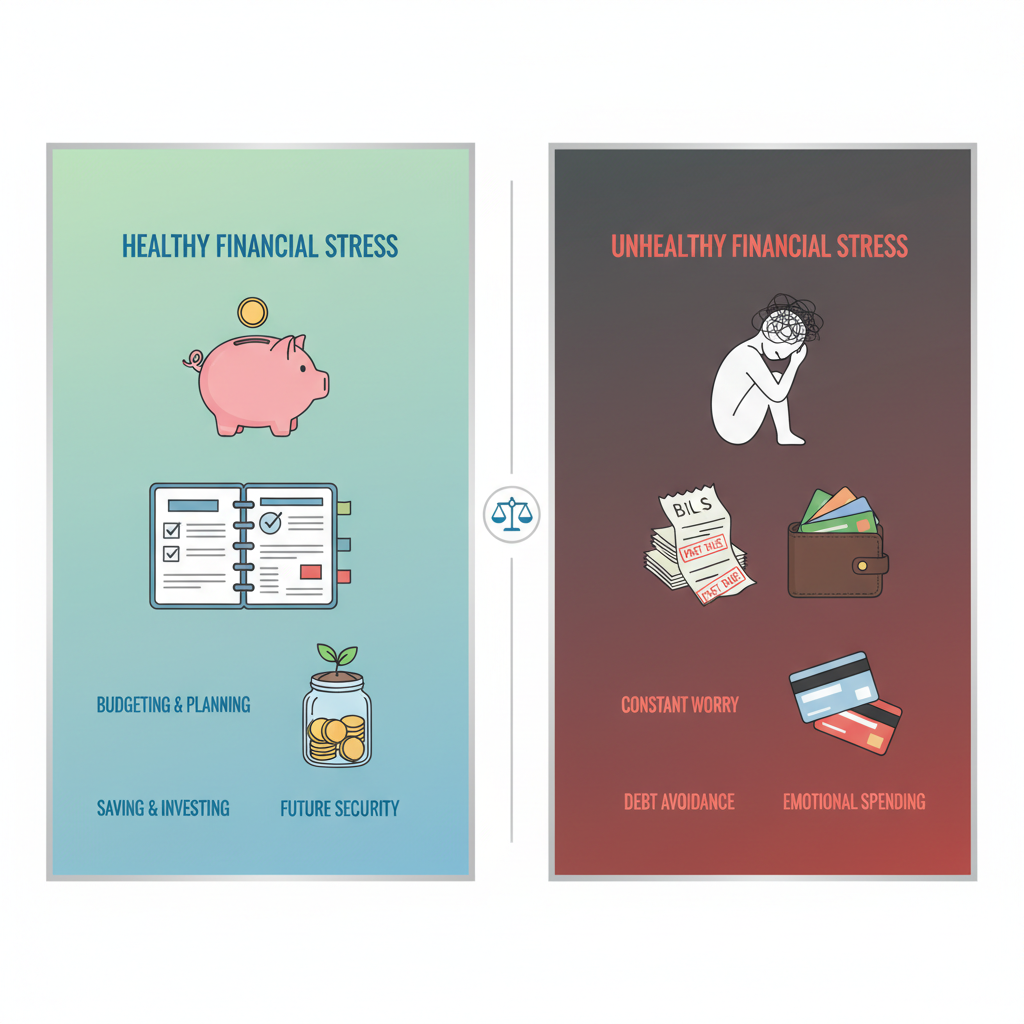
Not all stress is negative. A certain level of financial stress can be motivating. It could be the incentive needed to finally begin budgeting, establish an emergency fund or chip away at a loan. This stress is what brings about action and a good dose of achievement.
Bad money stress, however, is chronic and debilitating. It doesn’t mobilize so much as paralyze. It’s not a good kind of stress — it’s the kind that keeps you awake at night and worried about your future. Learning to distinguish between the two is crucial in order to respond wisely and seek help when you need it.
Frequently Asked Questions About Financial Stress
What are the main causes of financial stress?
Financial stress is often caused by a combination of factors, including low or unstable income, high levels of debt (like credit cards or student loans), unexpected emergencies, and a rising cost of living. A lack of financial literacy or poor money management habits can also contribute significantly.
What are the first signs of financial stress?
Early signs often include constant worry about money, difficulty sleeping, and avoiding looking at bank statements or opening bills. You might also notice increased arguments with family about finances or feelings of anxiety when making everyday spending decisions.
How does financial stress affect your health?
Prolonged financial stress can seriously impact both mental and physical health. It is closely linked to anxiety, depression, and difficulty concentrating. Physically, it can lead to headaches, high blood pressure, stomach issues, and a weakened immune system.
How can I reduce financial stress on a low income?
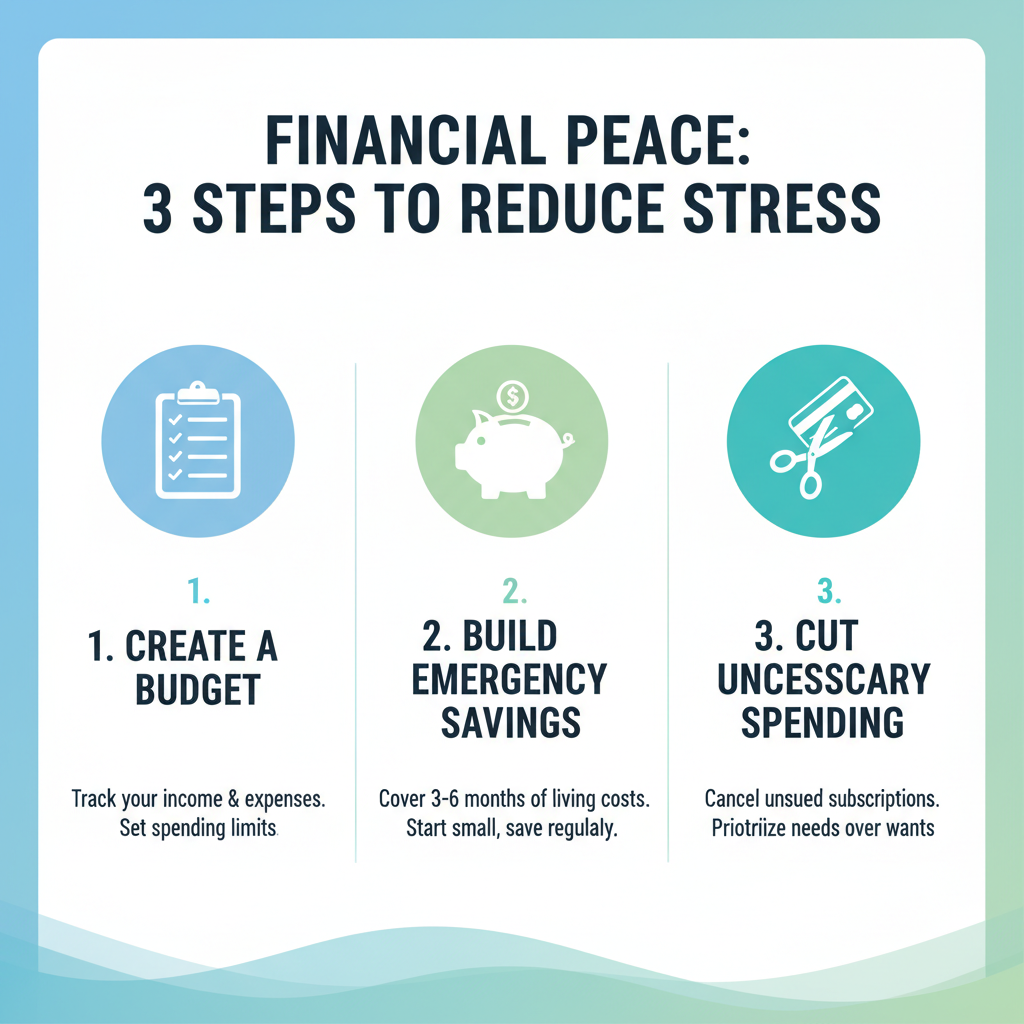
Start by creating a simple budget to track where your money goes. Focus on building a small emergency fund, even if it’s just a few dollars each week. Look for ways to cut non-essential expenses and explore resources for financial assistance in your area. Creating a clear plan, no matter your income, is a powerful first step.
Can financial stress affect my job performance?
Yes, financial stress often follows you to work. It can make it hard to focus, reduce motivation, and lower overall productivity. This distraction and worry can impact your performance and even your career growth over time.
Is all financial stress bad?
Not necessarily. A healthy level of financial stress can motivate you to create a budget, start saving, or work toward a financial goal. It becomes unhealthy when the stress is constant, overwhelming, and leads to feelings of hopelessness or paralysis instead of positive action.
Conclusion: Breaking Free from Financial Stress
First, is the knowledge of what Financial Stress really is. As I’ve shown here, this is about so much more than a short-term concern over the bills; it’s a significant emotional burden that can affect your health, your relationships and long-term opportunities. But keep in mind that financial strain doesn’t have to be forever.
But by identifying the signs early — whether that’s sleepless nights, or checking your bank balance and ignoring it — you can try to start making small, achievable changes now. Whether you start with a rudimentary budget, scale it back where you can or seek professional help, each step taken is forward progress. You don’t need a high income if you want to start building better habits; the thing you do need is a plan.
Stop letting money run your life. Begin today by picking one doable tip from this guide, such as parking your money into an emergency fund or tracking your spending for a week. Miracle because a few small steps start the snowball rolling, and beneath it is found the road to financial freedom. It’s up to you to reroute your financial story—beginning today.
Sabir Abdirahman Mohamed is the founder of ThinkFixer and a personal finance and digital growth writer. He helps beginners learn how to save money, build online income streams, and grow blogs or businesses through practical SEO strategies. His content focuses on budgeting, smart money management, realistic ways to make money online, and step-by-step blogging guidance. His mission is to make financial and digital knowledge simple, actionable, and accessible for everyone.