The Complete How to Save Money Guide: Go From Saving Nothing to Running a Successful Savings Plan
Does your bank account have a leak? You give your all at the office, you pay your bills, yet at the end of every month there’s barely anything left over. You aren’t the only one frustrated with this. Saving money isn’t just the change you find in your cushions; it’s shifting how you frame and handle your resources.
A sizable cushion in savings creates freedom. It turns a blown tire from a financial calamity into an annoyance. It makes that dream of putting a downpayment on a house into something concrete. But saving often seems to entail tight budgets and the sacrifice of little pleasures.
Here is the truth — you do not need to live an awful life while being able to save. It requires strategy. And by making a series of short-term wins, we can ultimately change the way people behave and stop the financial bleeding and start building wealth.” This guide will show you actionable steps and strategies proven to work—including tips on how to save more money in places you already spend it, without sacrificing your lifestyle.
Get good at the saving game between your ears
Before you cut a single expenditure, it’s that you should turn your attention on the psychology that drives your spending. Money is emotional. We spend when we are stressed, bored or trying to compete with others. Knowing the triggers is your first step to being able to conquer them.
Identify Your “Why”
Saving for the sake of saving is uninteresting. Hardly enough of an incentive to say “no” to immediate gratification. You need a concrete goal. Are you saving for a wedding? A safety net? Early retirement? By linking a strong emotional “why” to your savings goal, you will feel less like you’re missing out and more like it’s an investment into your future happiness.
Adopt an Abundance Mindset
Scarcity Many believe that there is never enough. It’s a recipe for desperation and starvation, hoarding now or addled indifference because “it doesn’t matter at all.” Transition to Abundance Mindset It may seem bizarre, but believing that you can produce and handle wealth is actually a mindset. It enables you to be proactive, not reactive. If this is challenging for you, try looking into ways that mindset mistakes keep people poor and identify if there are any mental blocks holding you back.
The 30-Day Rule
Impulse buying is the antithesis of saving. All you need to do the next time something catches your eye and you feel that rush of wanting (and not needing) it is wait 30 days. If you still want it in a month, and if you have the money right then, then go for it. In most cases, the urge will dissipate and you’ve saved that money without even trying.
The Other Side Of the Economy: Structurals Wealth is built on top of core2040_land_brink04123.
Willpower is a finite resource. If you depend strictly on self-discipline to save, it will eventually wear thin and you’ll slip. The best way to save consistently, it turns out, is to create a system that functions even when you are tired or not feeling particularly responsible.
Automate Everything
The best way to save money, then, is perhaps to never see it at all. Arrange for an automatic transfer from your checking account to your savings account on payday. Think of your savings as an unchangeable bill. With bills and savings automated, you only have to manage what’s left over — which tends to put the brakes on overspending.
Audit Your Subscriptions
We now live in a subscription economy. Streaming services, gym memberships, software trials and monthly boxes can quietly leech hundreds of dollars from your bank account annually.
Print out from your bank the last three months of statements.
Highlight every recurring charge.
Ask yourself : Did I use this in the past month? Does it bring me joy?
Nix anything that doesn’t rate a robust “yes.”
Separate Your Funds
Separate your savings at the bank from your checking. If you can check the balance of your checking account when you log in to see how much money is on your debit card, then you’re more likely to “borrow” from that money. the more friction that gets between you and your savings, the fewer impulse transfers.
Online Shopping Strategist: How to Save Money and Shop Smarter
You must spend money to live. The point is not to put a stop spending altogether but to maximize every dollar that’s leaving your hands.
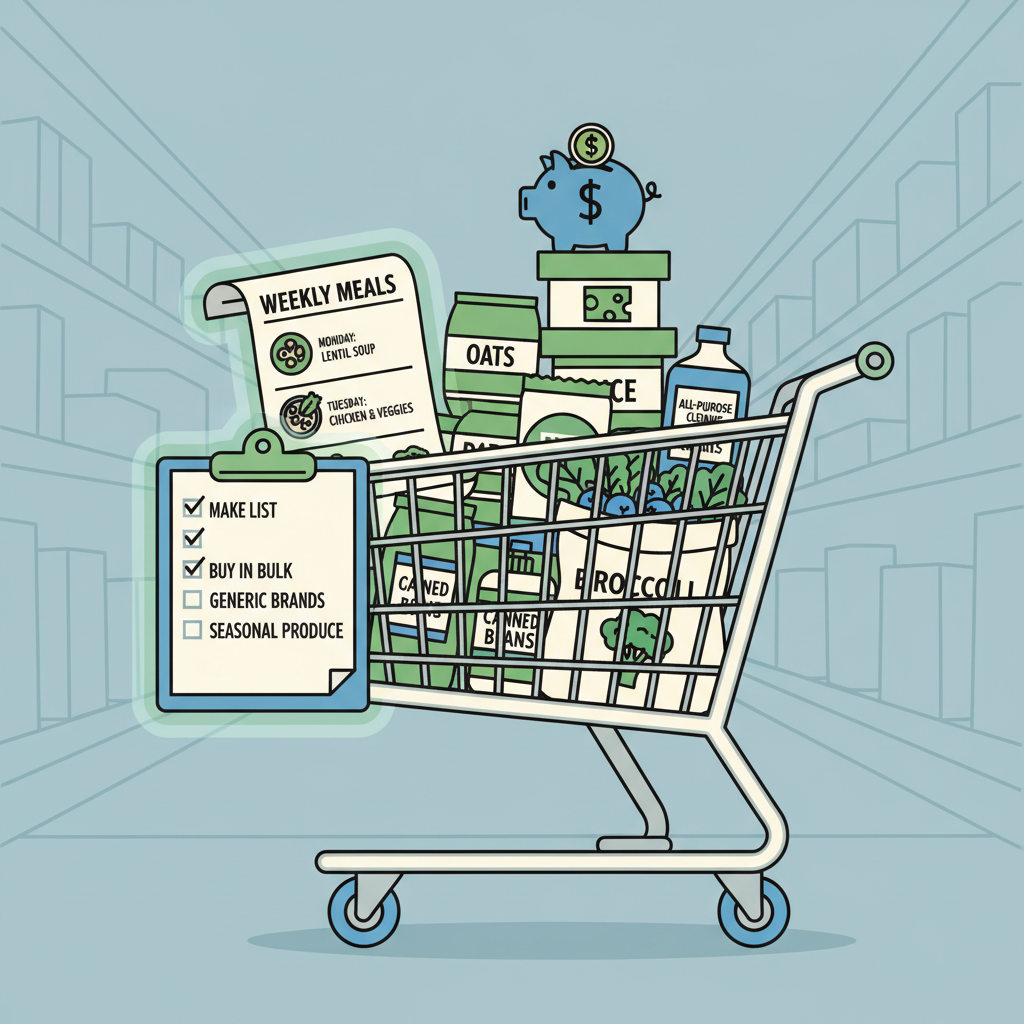
Grocery Shopping with Intent
After housing and transportation, food is usually a family’s third-largest expenditure.
Having a Plan (Meal Planning): Don’t ever go to the store without a plan. being very specific about what you are going to cook for the week discourages waste and takeout.
Buy Generic : In lots of cases, brand names and generics are produced in the same facilities from the same ingredients. The price is the only thing that separates them.
Shop by the Perimeter: Fresh fruits, vegetables, meats, and diary are typically on the outside of store. This also introduces her to the species in “the inner aisle of a supermarket” while in the outer aisles are unprocessed foods, fresh fruits and vegetables.
Mastering the Art of Negotiation
Everything is negotiable, especially recurring services. Phone your internet, cable, insurance providers once a year. Ask them if there are promotions going on or if they will match a competitor’s rate. A 20-minute phone call can save you $50 a month, or $600 a year.
Energy Efficiency
reducing your utility bills is a kind of saving that the planet profits from as well.
Unplug Electronics: If you’re not using them, they shouldn’t be sucking down power.
Turn Down the Thermostat: A few degrees below body temperature in winter and a few degrees above in summer can save tens of dollars per month.
Seal the Leaks: Drafty doors and windows are as good as tossing money out the window. This is an easy fix that costs next to nothing and also provides a boatload of bang for your buck in terms of energy efficiency.
High-Impact Savings: The Big Wins
Eliminating lattes are fine, but if you want to make a real dent, you need to examine your biggest expenditures: housing, transportation and debt.
Optimization of Transportation Costs
Cars are depreciable assets that cost a small fortune to maintain. If you are a household with two cars, decide whether you can get by with just one. If that’s not possible, examine your financing. If you’re paying out a high rate of interest on your contract, or need to offload an expensive car fast, you may want to learn how can I move my car finance to another person?
Tackling High-Interest Debt
You cannot save money when you’re paying 20% interest on a credit card. The interest eats into your potential savings.
The Avalanche Method: Pay the minimums on all debts, but put every extra dollar toward the debt with the highest interest rate. This is because this mathematically saves you the most money.
The Snowball Method: The idea here is to pay off the lowest balance first. Having the psychological victory of a debt eliminated can give you motivation to press on.
Housing Hacks
If you rent, perhaps a roommate could move in, or you could relocate to a less expensive neighborhood. If you own a home, consider refinancing your mortgage to lower interest rates. Housing is almost always your largest budget line, so a 10% discount here is much bigger than a few clipped coupons.
Increasing Your Income
There’s a minimum of expenses that you can lower (cannot go below zero) but there is no theoretical boundary on income. Sometimes the key to saving more is earning more.
The Side Hustle
Making a little extra money has never been so easy, thanks to the gig economy. Whether it’s a job driving for a rideshare app, freelance writing or dog walking, a couple hours a week can bring in hundreds of extra dollars per month. And if you are creative, perhaps you could think about how to make money with 3D printing or begin a small shop online.
Monetize Your Skills
Do you possess any ability that others value? Tutoring, consulting or handiwork can be profitable. Even hobbies can be monetized. For instance, if you are tech savvy or a social media addict you might learn how to make money with Google AdSense by creating a content site.
Sell What You Don’t Need
Look around your house. Chances are you have hundreds or even thousands of dollars in the form of unused electronics, clothing and furniture. By selling these items, you clear your space and fatten your savings account.
Advanced Savings Strategies
When you get the hang of that, consider more advanced wealth preservation strategies.
Tax Optimization
When all is said and done, taxes will likely be your largest lifetime expense. making use of tax-advantaged accounts such as 401(k)s and IRAs is, in the short term, reducing your taxable income today while planning for your future. If you are in a high-deductible health plan, an HSA (Health Savings Account) is an amazing vehicle for tax free savings.
The 50/30/20 Rule
This is a well-known budgeting method that “balances your life.
If you have hard time budgeting, see our guide to freelance budgeting tips which explains how to manage your variable income.
Creating a Financial Safety Net
Saving is not just the psychology of accumulation, it’s also the psychology of protection. Life is uncertain, and without any cushion one bad event can rob you of years’ worth of progress.
The Emergency Fund
This is non-negotiable. You want to accumulate three to six months of basic living expenses. This money is sitting in a high-yield savings account and only used for true emergencies (e.g. job loss, medical emergency). It can help keep you out of debt when life happens.
Avoiding “Lifestyle Creep”
The temptation is to upgrade your lifestyle when you get a raise or a bonus. You purchase the nicer car, move into a bigger apartment, splurge on clothing. Suddenly, your new income is soaked up and your savings rate hasn’t changed. You will put at least 50% of any future raises into savings. You get to enjoy your success and speed up the process of wealth creation.
Teaching the Next Generation
If you have kids teach them to save is the best thing a parent can do. It disrupts the cycle of financial scarp.
Lead by Example
Children listen to what you do, not just what you say. Allow them to see you budgeting, comparison shopping and saving toward goals. Talk openly about the distinction between “wants” and “needs.”
The Piggy Bank 2.0
Open a savings account for your children as soon as possible. and challenge them to save some of their allowance or birthday money. If you have teenagers, teach them how to earn money from home so they can see that earning and saving cash is better than sitting at home.
Navigating Financial Stress
And sometimes, try as we might, the weight of saving and investing just starts to feel like a little too much. Financial stress can be real, and it can also paralyze your decision-making.
If you’ve found yourself losing sleep over finances, it’s important to recognize the signs. Knowing what is financial stress lets you identify and solve the problem at its source, not just treat its symptoms. Also, don’t forget that saving money is a marathon, not a sprint. Be nice to yourself when you fall off, and try to think about progress instead of perfection.
Tools to Help You Save
You do not have to go through this by yourself. Technology can be a tremendous ally as you save.
Budgeting Apps: Apps that connect to your bank account can categorize spending and show you exactly where your money is going.
Cashback Apps Download apps which also give cash back on groceries and online shopping. It’s free money for purchases you would make anyway.
Browser Extensions: Use extensions that apply discount codes for you automatically at checkout.
Saving is the act of not spending your money — it’s pretty much that simple, and perhaps not that exciting. So you cannot save your way to wealth if you’ve got it under the mattress. Inflation will eat away at the value of this loan over time.
After you have your emergency fund in place and high-interest debt paid down, you need to start investing. The more your money works for you rather than just flashing—be it in the stock market, real estate or if you own a business—the better position you will be in. To learn how to master this shift, read about mastering financial education.
Conclusion
Saving money is not about scarcity, it’s about power. It’s about taking control of your resources so you can live the way you want to. If you can make the moves above, mastering your mindset, automating you accounts and maximizing your major expenses from the list above, and stick to them then it’s very difficult not to create a fortress of financial security.
Start small. Choose one or two tactics from this list and try them out this week. Maybe you call your insurance company, or maybe you finally arrange to have that automatic transfer of money from your checking into savings. Small disciplines repeated with consistency every day lead to great achievements gained slowly over time. You will thank this later to yourself.
Sabir Abdirahman Mohamed is the founder of ThinkFixer and a personal finance and digital growth writer. He helps beginners learn how to save money, build online income streams, and grow blogs or businesses through practical SEO strategies. His content focuses on budgeting, smart money management, realistic ways to make money online, and step-by-step blogging guidance. His mission is to make financial and digital knowledge simple, actionable, and accessible for everyone.