How to Build a Money Routine: A Step-by-Step Guide for Beginners
Introduction
Building consistent habits around money can transform your financial life, but many people struggle to know where to start. In this step-by-step guide, you’ll learn how to build a money routine that helps you manage spending, savings, and long-term goals with clarity and confidence. Whether you’re a budgeting beginner or looking to improve your habits, this guide will walk you through actionable steps you can start today.
Important Disclaimer
This article is intended for educational and informational purposes only and does not constitute financial, medical, or professional advice. The effectiveness of strategies on how to build a money routine may vary depending on individual financial circumstances, goals, and habits. Always consult a qualified financial professional before making significant financial changes.
Table of Contents
What Is a Money Routine?
A money routine is essentially a set of habits and processes you follow consistently to manage your finances. Think of it like brushing your teeth: once it becomes automatic, you do it without thinking, and it keeps you healthy. In the same way, a money routine keeps your finances in order without constant stress.
At its core, a money routine helps you answer key questions every day, week, and month: How much money do I have? How much am I spending? Am I saving enough? It’s not about tracking every penny obsessively or creating a rigid plan that makes life miserable. Instead, it’s about creating simple, repeatable actions that guide your decisions.
A good money routine is personal, realistic, and flexible. It can include checking your spending daily, reviewing your bills weekly, and planning your budget monthly. Over time, these small, consistent steps build financial clarity, reduce impulsive spending, and help you reach your goals without feeling restricted.
Why Most People Struggle to Stick With Money Habits
Even with the best intentions, most people fail to stick with money habits. There are several common reasons:
Too Much Change at Once – Trying to overhaul your entire financial life in a single day is overwhelming. Most people burn out and quit.
Lack of Visibility – Without knowing exactly what’s coming in and going out, it’s easy to overspend. Many underestimate how much small daily purchases, like coffee or snacks, add up.
Emotional Spending – Money is tied to emotions. Stress, boredom, or social pressure often leads to impulse spending, which can derail even the most careful plans.
Unrealistic Expectations – Expecting to save hundreds overnight or never buy anything fun creates frustration. If your goals don’t match your lifestyle, it’s hard to stay consistent.
No Clear System – A routine without structure is just good intentions. People often don’t have a simple framework to track spending, set goals, and adjust habits.
Neglecting Mindset – Many focus only on numbers and forget the psychology behind money. Guilt, shame, or anxiety can make routines feel like punishment instead of support.
Understanding why habits fail is the first step to building a system that sticks. A money routine solves these issues by keeping things simple, realistic, and repeatable.
Benefits of Having a Simple Money Routine
Building a money routine isn’t just about saving more—it transforms how you think, feel, and act with money. Here are some key benefits:
Clarity and Control – When you know where your money goes, surprises shrink. You can make informed choices instead of guessing.
Reduced Stress – Checking your accounts and knowing your bills are covered provides peace of mind. You stop worrying about whether you’ll make rent or run out of cash mid-month.
Automatic Savings – A routine makes it easier to set aside money regularly. Even small amounts add up over time, creating a safety net and building your emergency fund.
Better Spending Decisions – Tracking your spending highlights patterns, showing where money leaks are happening. You can adjust without feeling deprived.
Financial Growth – With a routine, you can plan for bigger goals like investing, paying off debt, or buying a home. Your money works for you, rather than disappearing unnoticed.
Consistency Over Perfection – A routine encourages steady, small wins instead of unrealistic leaps. Over time, these wins compound into meaningful progress.
Healthy Money Mindset – Repeating the same habits regularly trains your brain to approach money with calm, confidence, and intention instead of guilt or fear.
Ultimately, a money routine isn’t a restriction—it’s a framework that supports freedom, security, and growth. Once it becomes second nature, managing money feels less like a chore and more like a natural part of your day.
Before You Start: Set Up Your Money “Home Base”
Before creating a full routine, it’s crucial to set up a “home base” for your money. Think of it like setting up a desk before you start working—it keeps everything organized and accessible.
Choose One Tracking Method
Pick a single method to track your money consistently. You don’t need multiple apps, spreadsheets, or complicated systems. Choose the tool that fits your style:
Notebook or planner: Simple and tactile. Write down income and expenses daily.
Spreadsheet: Great for those who like numbers and formulas. You can track patterns visually.
Budgeting apps: Apps automate tracking, provide insights, and send reminders. Check out our guide on budgeting apps to find one that works for you.
The key is consistency. Switching tools constantly creates confusion. Pick one, stick with it, and build a habit around it.
Pick One Main Account for Bills and Essentials
Simplify your finances by using a single primary account for recurring bills and essential spending. This reduces complexity and prevents missed payments.
Deposit your paycheck into this account.
Use it for rent, utilities, groceries, transport, and insurance.
Keep a separate account for discretionary spending, savings, or emergency funds.
Having one central hub makes tracking easy, reduces mistakes, and gives you a clear snapshot of your financial health at any time.
Create 2–4 Spending Categories You’ll Actually Use
Instead of dozens of categories that overwhelm you, focus on 2–4 that match your life:
These categories should reflect your real spending patterns. They simplify decision-making and make budgeting actionable rather than abstract.
How to Build a Money Routine Step by Step
Building a routine is about taking small, actionable steps. Here’s a practical roadmap.
Step 1: Know Your “Must-Pay” Expenses
Start by listing all non-negotiable expenses: rent, utilities, groceries, transportation, insurance. These are the bills that keep your life running. Missing them can have serious consequences, so they come first in your routine.
Write them down and total them. Knowing this figure is your baseline. Everything else—saving, discretionary spending, fun money—comes after covering must-pays.
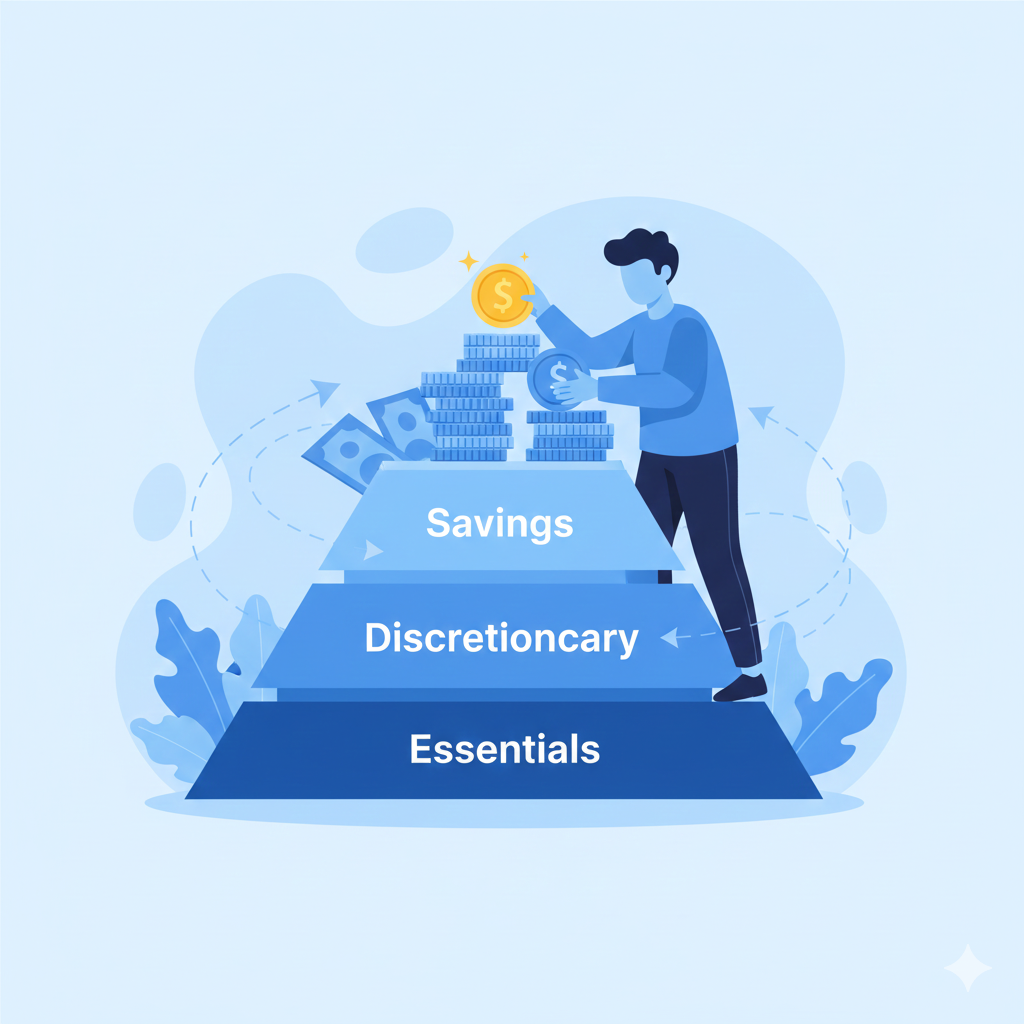
Visualize it like building a pyramid: essentials form the foundation. Without a solid base, other financial plans collapse.
Once you know your must-pays, you’ll gain clarity on how much free cash is left, reducing anxiety and preventing impulsive spending.
Step 2: Find Your Real Weekly Spending Baseline
Next, track all spending for at least one week, including coffee, snacks, subscriptions, and small purchases. This reveals your real baseline—the money flowing out before any budget adjustments.
Compare your baseline to your income. Are you overspending, just breaking even, or saving a little? Understanding income vs expenses is crucial to creating a routine that works.
Avoid guessing. Many underestimate minor expenses, which silently erode financial stability. Once you know your baseline, you can adjust without feeling deprived. It’s the foundation for your routine.
Step 3: Set One Clear Goal for the Next 30 Days
Pick a single, specific goal. Examples:
Save $100 in a separate account.
Reduce takeout spending by 25%.
Track every expense daily.
One goal keeps focus manageable. Trying to tackle multiple objectives at once can overwhelm you. Goals give your routine purpose and measurable progress, keeping motivation high.
Step 4: Decide Your Simple Budgeting Style
Select a budgeting style that fits your lifestyle and personality. Options include:
50/30/20 simplified – Allocate 50% to essentials, 30% to wants, 20% to savings.
Weekly envelope-style spending – Assign weekly limits to categories using your bank or app.
Pay yourself first – Automatically save a set percentage before spending.
Pick one, customize the percentages or categories to your needs, and stick with it. A routine only works if the budgeting framework is clear, realistic, and consistent.
Step 5: Automate the Important Stuff First
Automation reduces stress and prevents missed payments. Set up automatic transfers for:
Bills and essentials
Savings contributions
Debt repayments
This ensures your priorities are handled before discretionary spending. Think of it as paying yourself and your future first, making the routine almost effortless. Automation also prevents impulse spending because only leftover funds are available for discretionary use.
Step 6: Create a “Fun Money” Rule to Prevent Burnout
A routine without fun leads to frustration. Assign yourself a weekly or monthly fun allowance—money you can spend guilt-free on coffee, entertainment, hobbies, or treats.
Even a small amount keeps your routine sustainable and enjoyable. Think of it like a mental reset button: fun money reduces the risk of impulse spending elsewhere because you have a controlled outlet.
Example: Daily Money Routine
Here’s what a simple daily money routine might look like:
Check account balances each morning
Track expenses in a budget app
Set aside planned savings right after payday
Review progress for 10 minutes each evening
Over time, this builds habits that support financial confidence and awareness.
Step-by-Step Plan to Build Your Money Routine
Assess your current habits: Write down how you spend and save
Set goals: Define what you want your routine to achieve
Choose specific actions: Daily/weekly tasks you can commit to
Start small: Build consistency before increasing complexity
Track your habits: Use a habit tracker or journal
Review monthly: Adjust your routine based on results
Daily, Weekly, and Monthly Money Routine Checklist
Creating a money routine works best when you break it into manageable timeframes: daily, weekly, and monthly. Each layer reinforces the other and keeps your finances organized without overwhelming you.
Daily Routine: 2-Minute Money Check
Your daily routine should be short but consistent—think of it as a quick financial health check. Spend just 2 minutes each day to:
Check your account balances.
Track any spending from the day.
Note any unexpected charges or subscriptions.
This small habit prevents surprises at the end of the month and keeps you aware of your cash flow. Even logging a coffee or Uber ride can reveal patterns you might otherwise ignore.
Daily check-ins also reinforce your money mindset. Over time, it trains your brain to notice spending choices and make better decisions automatically.
Tip: Use an app or simple spreadsheet to record transactions. If you prefer a more visual approach, a sticky note or planner works too. The key is consistency, not complexity.
Weekly Routine: 15-Minute Reset
Set aside 15 minutes once a week for a “money reset.” During this session:
Review your spending – Compare actual spending to your budget. Are you staying within limits? Highlight areas where adjustments are needed.
Pay bills if not automated – Make sure all essentials are covered.
Transfer savings – If not automated, move money to emergency or goal accounts.
Plan for upcoming events – Factor in social outings, birthdays, or irregular expenses.
A weekly review prevents small issues from snowballing into stress. You’ll notice trends, such as overspending on groceries or impulse spending on online shopping, and can take corrective action.
Tip: Use this time to reflect positively on progress, not just mistakes. Celebrating small wins—like staying under your fun money limit or reaching a mini savings goal—reinforces healthy habits.
Consistency in weekly check-ins also allows you to experiment. For example, you can try swapping an expensive snack for a cheaper alternative or adjusting your fun money allocation. This iterative approach helps you optimize your routine without feeling deprived.
Monthly Routine: 45-Minute Planning Session
Once a month, dedicate 45 minutes to review the full picture:
Analyze income vs expenses – Identify patterns and compare them to your baseline.
Adjust your budget – Shift funds to cover upcoming irregular expenses or boost savings.
Set next month’s goal – Even one small target, like reducing takeout by 10%, keeps progress measurable.
Review debts and savings – Check balances, plan extra contributions if possible.
A monthly session provides perspective beyond daily and weekly details. It ensures your routine aligns with long-term goals, like building an emergency fund or paying off debt.
Tip: Use monthly review questions such as: “Where did I overspend? What can I do differently next month?” This keeps your routine proactive instead of reactive.
Simple Budgeting Styles You Can Use
Different budgeting styles suit different personalities. Here are three beginner-friendly approaches:
50/30/20 Simplified
Allocate:
50% to essentials
30% to wants
20% to savings
This approach is flexible, easy to remember, and works for most beginners. It ensures essentials are covered, prevents overspending on fun items, and encourages consistent saving.
Weekly Envelope-Style Spending (No Cash Needed)
Instead of actual envelopes, use a digital version: assign categories like groceries, fun money, and gas a weekly limit. Track each purchase against the limit.
This method makes overspending visible immediately and prevents month-end surprises. It’s especially useful for those who struggle with impulse spending, giving a clear, actionable framework.
“Pay Yourself First” Mini-Plan
Before paying bills or spending, automatically set aside a small portion for savings. Start with 5–10% of income. Treat it like a non-negotiable expense.
Benefits:
Builds an emergency fund without thinking about it.
Encourages a long-term savings mindset.
Reduces the temptation to spend leftover cash.
How to Cut Wasteful Spending Without Feeling Miserable
Cutting wasteful spending doesn’t mean living miserably. Focus on these strategies:
Spot the Top 3 Leaks
Common leaks:
Subscriptions you barely use
Daily snacks or coffee runs
Impulse spending
Track these for one week to see where money slips away. Once identified, you can make small adjustments. For more tips on stopping hidden leaks, read how to stop wasting.
Use a 24-Hour Rule for Non-Essentials
Delay non-essential purchases by 24 hours. Often, the urge fades, preventing impulse spending. This simple tactic curbs unnecessary purchases without feeling restrictive.
Swap, Don’t Erase: Cheaper Alternatives
Instead of cutting things entirely, find cheaper options. Examples:
Make coffee at home instead of buying it daily
Stream movies rather than paying for individual rentals
Cook meals in bulk to reduce takeout
Small swaps add up while keeping life enjoyable.
Build Savings Into Your Routine (Even If You’re Broke)
Building savings might feel impossible if you’re living paycheck to paycheck, but even tiny, consistent actions can make a huge difference. The key is to start small, automate, and gradually increase contributions over time.
Start with a Tiny, Automatic Amount
Even if you feel like you can’t save anything, start with a very small amount—$5 or $10 per week. The goal is consistency, not size. Treat it like brushing your teeth: non-negotiable and automatic.
Automation is the most powerful tool here. Set up a recurring transfer from your checking account to a separate savings account on payday. This way, you save before you even see the money in your everyday account. Over time, your savings balance grows quietly in the background, and you won’t even feel the pinch.
Think of this like planting seeds. You won’t see a forest immediately, but tiny consistent contributions compound into a meaningful amount. Many people give up because they expect immediate results, but even small savings habits build financial confidence and security.
Create an Emergency Buffer Goal
Once you’ve started saving, set a tangible emergency buffer goal. A realistic first target is $500–$1,000. This is enough to cover minor emergencies like car repairs, medical bills, or unexpected bills without going into debt.
Treat this money as untouchable except in real emergencies. It creates a safety net, reducing anxiety and preventing the stress that comes from living paycheck to paycheck. Even if it takes several months to reach, the routine of consistently depositing small amounts helps you reach the goal faster than trying to save a large sum all at once.
Your emergency fund is like a financial airbag: it cushions you from life’s unexpected bumps. Once in place, you’ll notice increased confidence in daily spending decisions. You’re less likely to panic or rely on credit cards when surprises happen.
Use “Windfall Rules” for Bonuses or Gifts
Windfalls—bonuses, tax refunds, gifts—can derail your routine if spent immediately. Instead, divide the money into categories:
50% for savings – contributes to your emergency fund or long-term goals.
30% for debt repayment – helps reduce interest and financial stress.
20% for fun money – allows guilt-free enjoyment.
This prevents you from blowing windfalls on temporary pleasures and ensures the extra money actually improves your financial health. Think of windfalls as accelerators: a small fraction invested in your savings habit compounds faster than regular contributions alone.
Even if you don’t receive large windfalls often, applying this principle to irregular income—like freelance work or side hustles—can significantly boost your savings over time. The key is consistent allocation rules that fit your lifestyle.
Money Mindset Habits That Make the Routine Stick
Your money routine is only as strong as your mindset. Without the right habits and attitudes, even the best systems fail.
Replace Guilt with “Next Step” Thinking
Mistakes happen. You might overspend on takeout or forget to log a purchase. Instead of dwelling on guilt, ask yourself: “What’s the next step?”
For example, if you overspend on snacks today, adjust tomorrow by slightly reducing discretionary spending or adding a small amount to savings. Focusing on the next action keeps momentum going and prevents small slip-ups from becoming setbacks.
This mindset shifts money from a source of stress to a tool for action. You’re no longer punishing yourself for mistakes but using them as opportunities to learn and improve.
Visual cues are powerful motivators. Progress triggers—like tracking streaks, checking off daily transactions, or updating a savings chart—remind your brain of achievements and reinforce habits.
For instance:
A visual tracker showing how many days you stayed under budget can create a sense of accomplishment.
Seeing savings grow month over month reinforces the payoff of your routine.
Notifications from budgeting apps act as gentle reminders without being intrusive.
These triggers turn abstract goals into tangible wins. They make the routine rewarding, which helps you stick to it over the long term.
Plan for Slip-Ups
Even the most disciplined savers and budgeters have setbacks. Plan for slip-ups in advance with a “restart rule”: acknowledge the mistake, reset the routine, and continue without judgment.
For example, overspending one week doesn’t erase progress—it’s just a temporary detour. Having a pre-decided restart plan prevents emotional reactions, like giving up entirely, and keeps the routine intact.
Think of it like training for a marathon: a stumble doesn’t end the race, it’s simply part of the journey.
Tools to Help You Build and Track Your Money Routine
Even with a great plan, pitfalls exist. Avoid these common mistakes:
Trying to Change Everything at Once
Attempting a complete financial overhaul at once leads to burnout. Start with one habit, like tracking daily expenses, before tackling savings or cutting subscriptions. Gradual progress builds confidence and sustainable habits.
Being Too Strict and Quitting
Overly rigid routines cause frustration. Denying all discretionary spending or creating unrealistic savings targets often leads to quitting. Incorporate fun money, small treats, and flexibility to maintain consistency without guilt.
Not Reviewing Your Plan
Without regular check-ins, routines stagnate. Daily, weekly, and monthly reviews allow you to identify leaks, adjust budgets, and track goals. Skipping reviews often leads to unnoticed overspending and missed opportunities to optimize your money routine.
Example Money Routines (Pick One and Copy It)
Routine A: Paycheck-to-Paycheck Starter
Daily: Log expenses, check balances, and note any irregular charges.
Weekly: Allocate your paycheck across essentials, savings, and fun money. Track small leaks like coffee or snacks.
Monthly: Adjust the budget for irregular expenses, review your emergency fund, and set next month’s goal.
This routine prioritizes essentials, automates small savings, and gradually introduces healthy spending habits.
Routine B: Young Professional with Irregular Spending
Daily: Use a budgeting app to track variable expenses, including dining out, freelance income, or social events.
Weekly: Compare spending to your baseline. Identify overspending patterns and adjust fun money allocations.
Monthly: Allocate windfalls to savings and debt. Set a clear 30-day goal, such as increasing emergency fund contributions or cutting subscriptions.
This routine provides flexibility while maintaining discipline.
Routine C: Busy Schedule, Low Time
Daily: Quick 2-minute balance check to stay aware.
Weekly: 15-minute reset for bill review, small budget tweaks, and discretionary spending adjustments.
Monthly: 45-minute planning session to automate bills, review savings, and set one small financial goal.
Perfect for people with demanding jobs, this routine keeps finances under control with minimal time investment.
Templates That Help
Simple Spending Tracker Template
Columns: Date, Category, Amount, Notes. Log daily expenses and categorize them weekly. This provides clarity, highlights money leaks, and allows you to track progress toward goals. Visual charts make it easier to see patterns.
Bill Checklist Template
Columns: Bill, Amount, Due Date, Paid Status. Helps ensure essentials are covered and prevents late fees. Review weekly and mark bills as paid. This reduces stress and creates confidence in your routine.
Monthly Review Questions
Where did I overspend?
Which goals did I meet?
Which spending habits should I adjust?
How much progress did I make toward savings or debt repayment?
Answering these questions during a monthly 45-minute session helps refine your routine and reinforces consistency.
Learning how to build a money routine is one of the simplest ways to take control of your finances without feeling overwhelmed.
A strong money routine combines small daily habits, weekly resets, and monthly planning. Automating savings, allocating fun money, tracking expenses, and cultivating a healthy mindset makes financial management simple, sustainable, and stress-free. Start small, stay consistent, and watch your finances grow steadily over time.
Frequently Asked Questions
1. How long does it take to build a money routine? Consistency for 3–6 weeks is usually enough for habits to become automatic.
2. What if my income changes every month? Track your baseline, adjust your routine dynamically, and prioritize essentials and savings first.
3. What’s the easiest budget method for beginners? 50/30/20 simplified or weekly envelope-style budgets work best for clarity and simplicity.
4. How do I save money living paycheck to paycheck? Start small, automate savings, track expenses, and identify money leaks to redirect cash.
5. How much “fun money” should I allow? Around 5–10% of your income keeps the routine sustainable and enjoyable.
6. What if I keep overspending even with a routine? Use a 24-hour rule, swap expensive items for cheaper alternatives, and review spending weekly.
7. Do I need a budgeting app or can I do it manually? Either works. Apps automate tracking, while manual logs increase awareness and accountability.
8. How often should I review my budget and spending? Daily check-ins, weekly resets, and monthly planning sessions are ideal.
9. What’s a good first savings goal? Start with a $500–$1,000 emergency buffer or a tiny automated weekly savings amount.
10. How do I stay motivated without obsessing over money? Use progress trackers, celebrate wins, focus on one goal at a time, and adopt a positive money mindset.
Sabir Abdirahman Mohamed is the founder of ThinkFixer and a personal finance and digital growth writer. He helps beginners learn how to save money, build online income streams, and grow blogs or businesses through practical SEO strategies. His content focuses on budgeting, smart money management, realistic ways to make money online, and step-by-step blogging guidance. His mission is to make financial and digital knowledge simple, actionable, and accessible for everyone.