
Your Guide to Using a Debt Payoff Calculator
Debt can feel like a heavy weight, influencing your daily decisions and casting a shadow over your future plans. Whether it’s from credit cards, student loans, or a mortgage, managing what you owe is a critical step toward financial wellness. The good news is that with a clear strategy, becoming debt-free is an achievable goal.
A powerful tool in your arsenal is a Debt Payoff Calculator. It transforms a seemingly insurmountable mountain of debt into a series of manageable steps. By providing a clear timeline, it helps you visualize the finish line and stay motivated.
This guide will walk you through how to use our calculator effectively. We’ll also explore proven strategies for accelerating your payoff journey and explain why taking control of your debt is one of the best things you can do for your financial health.
Total Debt Amount ($)
Monthly Payment ($)
Understanding Debt Payoff and Its Importance
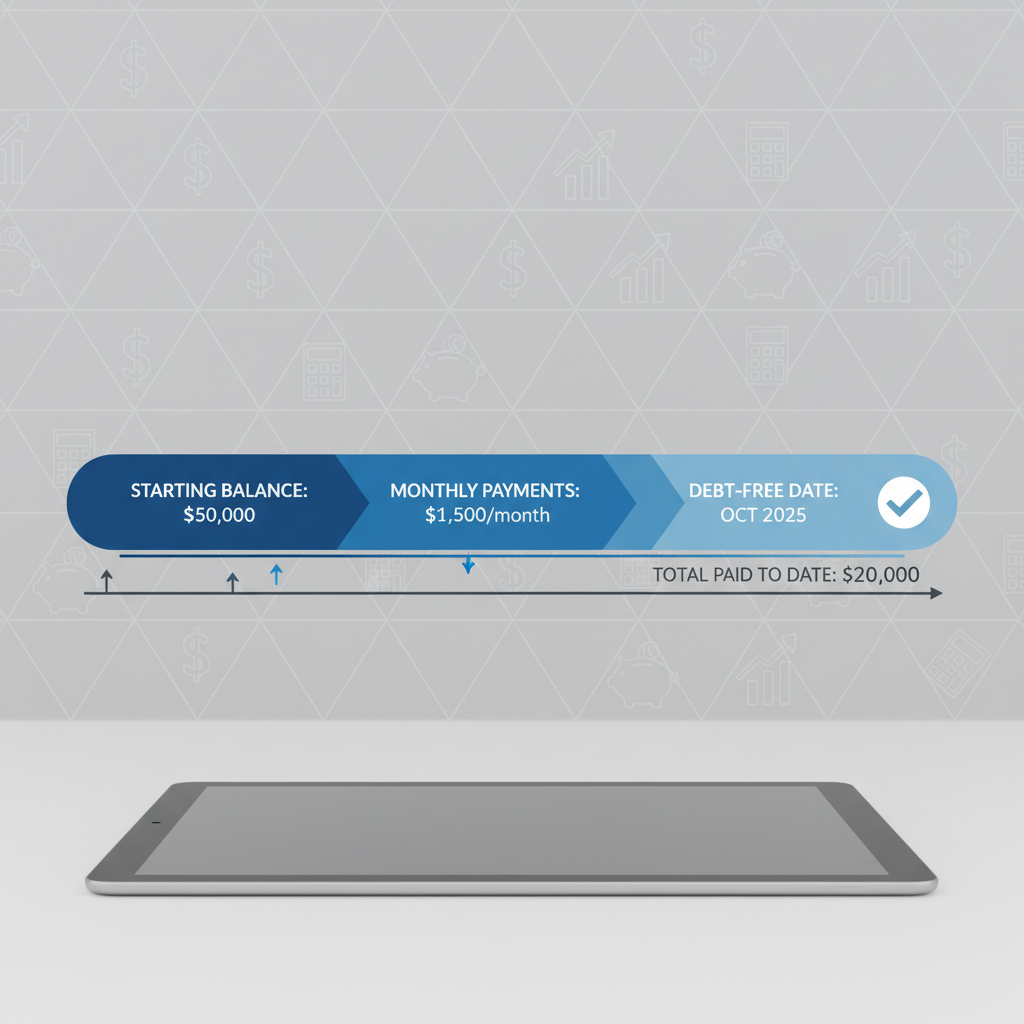
At its simplest, a debt payoff plan is a structured approach to eliminating your outstanding balances. Instead of making random or minimum payments, you create a focused strategy to pay down what you owe as efficiently as possible. This process is crucial because high-interest debt, like that from credit cards, can grow quickly if left unchecked.
Ignoring debt doesn't make it go away. In fact, it often gets more expensive over time due to accumulating interest. By actively working to pay it off, you not only save money but also open up new opportunities. The income once used for debt payments can be redirected toward saving for a home, investing for retirement, or simply enjoying life with less financial stress.
How to Use the Thinkfixer Debt Payoff Calculator
Our debt payoff calculator is designed for simplicity and clarity. It helps you answer the most important question: "How long will it take to pay this off?" Follow these steps to create your personalized debt-free timeline.
Step 1: Enter Your Total Debt Amount
First, gather all your balances. This includes credit cards, personal loans, car loans, and any other liabilities you want to tackle. Add them up to get a single figure.
- Input: Enter this total in the Total Debt Amount ($) field.
Step 2: Determine Your Monthly Payment
Next, decide how much you can realistically afford to put toward your debt each month. Look at your budget and find an amount that is more than the combined minimum payments. The more you can pay, the faster you'll be debt-free.
- Input: Enter your planned payment in the Monthly Payment ($) field.
Step 3: Calculate and Analyze
Click the Calculate Payoff Time button. The calculator will instantly estimate how many months or years it will take to clear your balance based on your inputs.
Example Scenario:
Let's say you have a combined credit card debt of $15,000.
- Total Debt Amount: $15,000
- Monthly Payment: $400
The calculator will show you that it will take approximately 4 years to become debt-free. This simple calculation transforms a vague goal into a concrete plan with a clear end date, which is a powerful motivator.
The Life-Changing Benefits of Paying Off Debt
Eliminating debt is about more than just numbers on a screen. It has a profound impact on your overall well-being.
1. Enhanced Financial Stability
When you get rid of debt, you reduce your fixed monthly expenses. This frees up cash flow, making it easier to handle unexpected costs like a car repair or medical bill. You'll be less reliant on credit and better equipped to build a solid emergency fund.
2. Reduced Stress and Improved Mental Health
Financial worries are a leading cause of stress. The constant pressure of owing money can affect your sleep, relationships, and mental clarity. Paying off debt provides an incredible sense of relief and control, allowing you to focus on other aspects of your life.
3. Increased Freedom and Opportunity
Every dollar that isn't going toward an old debt is a dollar you can put toward your future. Being debt-free gives you the freedom to take calculated risks, such as starting a business, changing careers, or traveling. Your income becomes a tool for building wealth, not just servicing debt.
Real-Life Applications for the Debt Payoff Calculator
This tool is versatile and can be used for various types of debt. Here are a few common scenarios:
Credit Card Debt
This is often the most pressing type of debt due to high interest rates. Use the calculator to see how increasing your monthly payment from the minimum to a fixed, higher amount can save you thousands in interest and shave years off your payoff time.
Student Loans
Student loan balances can be intimidating. The calculator helps you understand the long-term impact of your payments. You can experiment with different payment amounts to see how you might pay off your loans ahead of schedule.
Mortgages and Auto Loans
While considered "good debt" by some, paying off these loans early can lead to massive interest savings. Use the calculator to see if making one extra payment per year or adding a small amount to your monthly payment is worth it for you.
Proven Strategies for Faster Debt Payoff
Want to speed up your timeline? There are two popular methods for strategically paying off multiple debts.
1. The Debt Snowball Method
With this strategy, you list your debts from the smallest balance to the largest. You make minimum payments on all debts except for the smallest one, which you attack with every extra dollar you have. Once that smallest debt is gone, you "roll" its payment amount over to the next-smallest debt. This creates a "snowball" of momentum. This method is great for motivation, as the quick wins keep you engaged.
2. The Debt Avalanche Method
The debt avalanche method is mathematically optimal. You list your debts by interest rate, from highest to lowest. You make minimum payments on all debts except for the one with the highest interest rate. All extra funds go toward that high-interest debt until it's paid off. Then, you move to the debt with the next-highest rate. This approach saves you the most money in interest over time.
Related Tools for a Complete Financial Plan
A debt payoff calculator is just one part of your financial toolkit. Combine it with these other resources for a holistic approach to your money.
Monthly Budget Calculator
To find extra money for debt payments, you first need to know where your money is going. A budget calculator helps you track income and expenses, identifying areas where you can cut back.
Savings Calculator
While paying off debt, it's still wise to build an emergency fund. A savings calculator helps you set goals for this fund, which acts as a buffer against future debt.
Passive Income Calculator
Once you're debt-free, you can start making your money work for you. This calculator helps you understand how your investments can generate income, accelerating your journey to financial independence.
Frequently Asked Questions (FAQs)
Q: Does the calculator account for interest rates?
A: This simple calculator focuses on the time it takes to pay off a principal balance with a fixed payment. For strategies involving multiple debts with different interest rates (like avalanche or snowball), it's best to use this tool for a high-level estimate and then create a more detailed plan.
Q: Should I save money or pay off debt first?
A: Most financial experts recommend a hybrid approach. Start by building a small emergency fund (e.g., $1,000) to cover minor emergencies. After that, aggressively pay down high-interest debt. Once that's gone, you can focus on building a larger emergency fund and investing.
Q: What is a good monthly payment amount?
A: It depends entirely on your income and expenses. A good starting point is the 50/30/20 rule: 50% of your income for needs, 30% for wants, and 20% for savings and debt payoff. Try to allocate as much of that 20% as possible to your debt.
Take the First Step Today
Debt doesn't have to define your financial life. By creating a plan and staying consistent, you can regain control and build a more secure future. Use the Thinkfixer Debt Payoff Calculator today to map out your first steps. Your future self will thank you.
For official advice on managing and paying off debt, visit the Consumer Financial Protection Bureau’s debt resources.