Bad Credit Financing for ATV: Your Complete Guide to Getting Approved
Introduction
Securing bad credit financing for an ATV can feel challenging, but it’s possible with the right approach. This guide explains how lenders assess applications, what strategies you can use to improve your chances of approval, and practical steps you can take even if your credit score isn’t ideal.
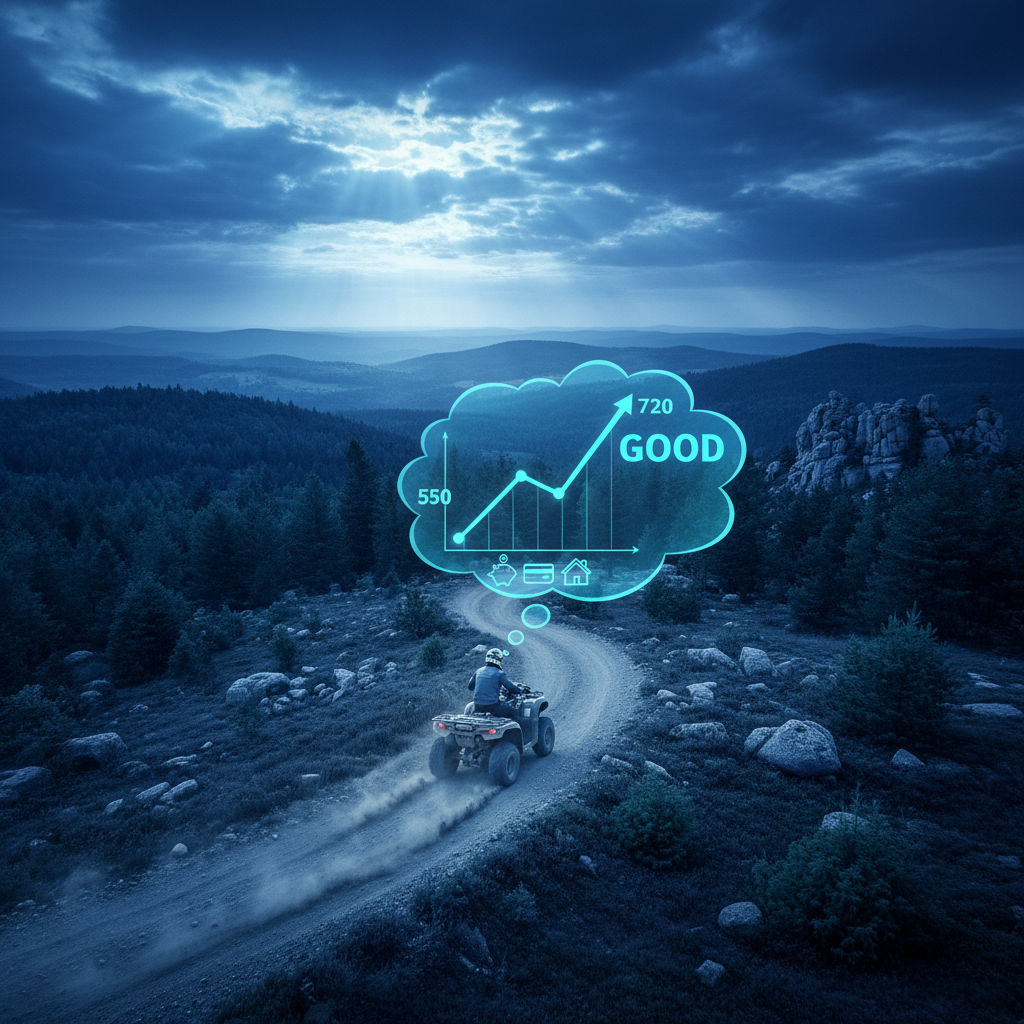
If you’ve ever asked yourself these questions, you are not alone. Many outdoor enthusiasts face hurdles when it comes to funding their hobbies. The good news? Your credit score doesn’t have to be a stop sign. It might just be a speed bump.
In this guide, we are going to walk you through everything you need to know about bad credit financing for ATVs. We will cover what it is, how it works, and exactly how you can get approved so you can stop worrying about numbers and start planning your next ride. Let’s get started.
Important Disclaimer
This article is for educational purposes only. Bad credit financing for an ATV involves personal financial decisions that vary by lender, credit profile, income, and local regulations. Nothing here constitutes financial, legal, or lending advice. Always consult with qualified financial professionals or lenders before signing any loan agreement.
Table of Contents
What is Bad Credit Financing for ATV?
So, what exactly do we mean when we talk about bad credit financing for ATVs? Simply put, it is a type of loan specifically designed for individuals whose credit scores fall below the “good” or “excellent” range typically required by traditional banks.
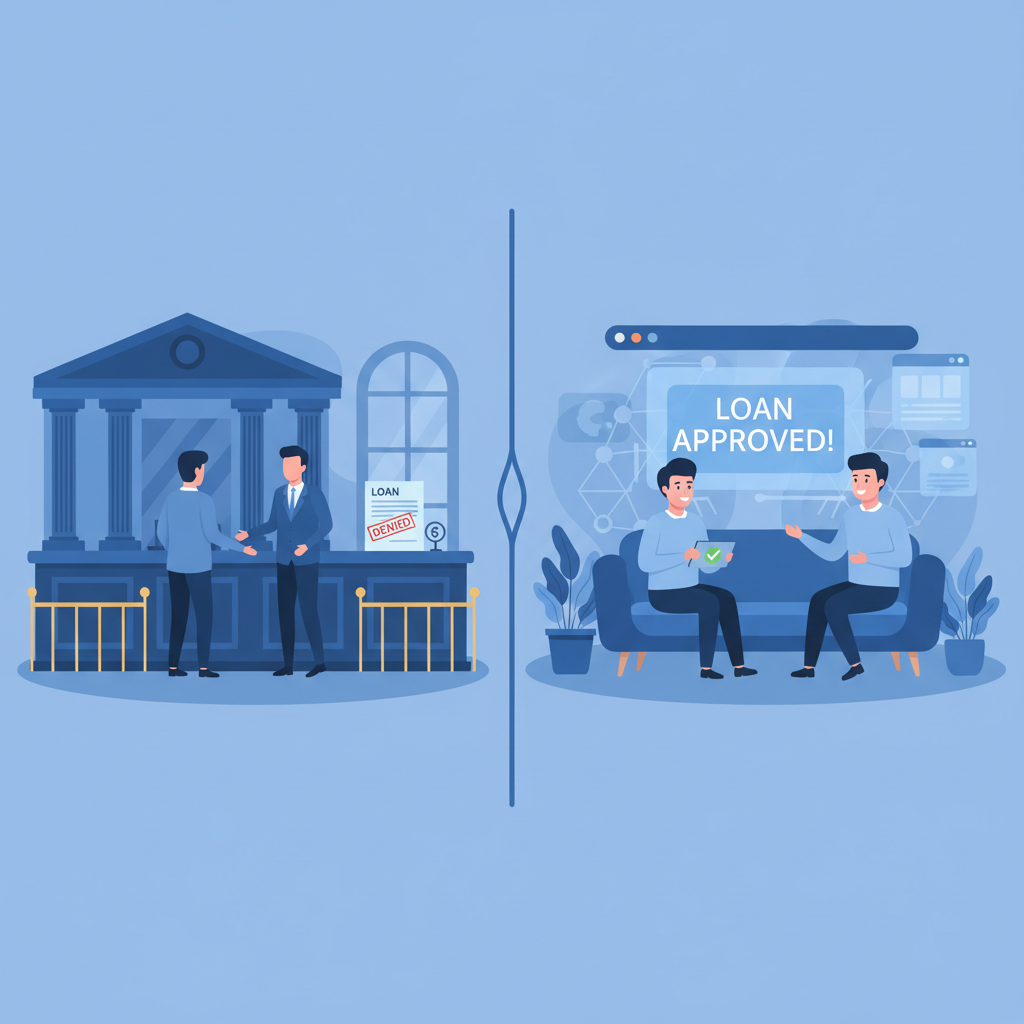
When you walk into a standard bank to ask for a loan, they look at your credit history like a report card. If you have missed payments, carried too much debt, or simply haven’t built up enough history, they might see you as a “high risk.” Traditional financing options often slam the door shut in these scenarios.
Bad credit financing is different. These lenders specialize in working with borrowers who have less-than-perfect scores. They look beyond just the three-digit number. Instead of focusing solely on your past mistakes, they often look at your current ability to pay. This means they might consider your steady income, your job stability, and your debt-to-income ratio.
It is a vital solution because it opens doors. Without these specialized options, buying a powersports vehicle would be impossible for a huge chunk of the population. It acknowledges that people are more than just their credit report and gives you a chance to prove you are reliable today, regardless of what happened yesterday.
Why Consider Bad Credit Financing for ATV?
You might be wondering, “Is it really worth it?” Taking on debt when your credit is already shaky can feel scary. However, there are compelling reasons to consider this route.
Accessibility is the biggest benefit. For many people, saving up thousands of dollars in cash to buy an ATV outright just isn’t realistic in the short term. Powersports financing bad credit options bridge that gap. They allow you to get the vehicle now and pay for it over time. This flexibility means you don’t have to put your life or your hobbies on hold for years while you save every penny.
It can be a tool for rebuilding. This is a point many people miss. If you secure a loan and make your payments on time, every single month, you are demonstrating financial responsibility. Many lenders report your payment history to credit bureaus. Over time, this positive behavior can actually help lift your credit score. It’s like hitting two birds with one stone: you get the ATV you want, and you get a chance to repair your credit history.
Dispelling the myths. There is a common misconception that bad credit loans are always predatory or “scams.” While there are definitely bad actors out there (which we will discuss how to avoid later), legitimate lenders exist who want to do business with you. They charge higher rates to offset their risk, but they aren’t necessarily trying to trap you. Understanding the terms is key. It enables individuals to purchase an ATV despite financial challenges, turning a “no” into a “yes.”
How Does Bad Credit ATV Financing Work?
Understanding the mechanics of the loan process can take a lot of the stress away. It’s not magic; it’s just a series of steps where a lender decides if they trust you to pay them back.
The Application Process It starts with an application. You will fill out forms detailing who you are, where you live, and most importantly, how you make money. In the digital age, much of this happens online, but if you are at a dealership, you might do it in an office. This is very similar to the standard financing process you might see for a car, but the criteria for approval are adjusted for higher risk.
What Lenders Look For Since the lender knows your credit score isn’t perfect, they need other proof that you are safe to lend to.
Proof of Income: This is huge. You will likely need to show pay stubs, bank statements, or tax returns. They need to see that cash is coming in regularly.
Residence Stability: Lenders like to see that you have lived in the same place for a while. It suggests stability.
Down Payment: This is often non-negotiable for bad credit loans. Putting your own cash down reduces the amount the lender has to give you, which lowers their risk.
Risk Assessment and Loan Terms Here is the reality check: because the lender sees you as a higher risk, the terms of the loan will reflect that. This usually translates to bad credit ATV financing rates being higher than standard rates.
Think of it like insurance. If you are a new driver, you pay more for insurance because there is a higher chance you might crash. Similarly, if you have bad credit, you pay a higher interest rate because statistically, there is a higher chance of missed payments. The lender uses your application data to calculate an interest rate and a monthly payment that they feel comfortable with. If you agree to those terms, you sign the paperwork, and the ATV is yours—as long as you keep making those payments.
According to LendingTree, focusing on lenders who specialize in “powersports” lending and improving your credit score over time can increase your chances of approval, even with a less-than-ideal credit history. :contentReference[oaicite:1]{index=1}
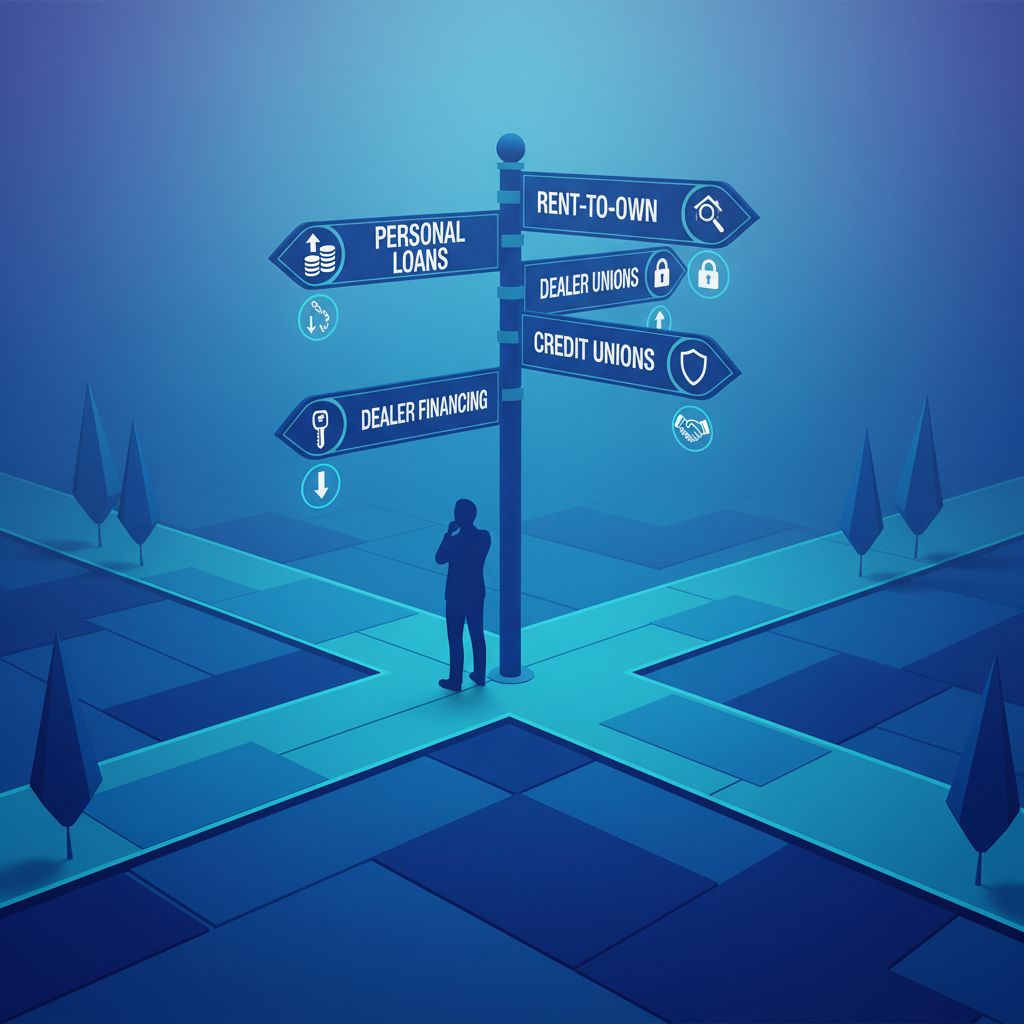
Types of Bad Credit ATV Financing Options
Financing Option
Credit Check
Interest Rate
Down Payment
Best For
Dealer Financing
Yes
Medium–High
10%–20%
Fast approval at dealerships
Personal Loan
Yes
High
Optional
Private sellers
Credit Union
Yes
Low–Medium
5%–15%
Better rates, local members
Specialized Lenders
Yes
High
10%–25%
Very low credit scores
Rent-to-Own
No
Very High
None
No credit history (last resort)
Not all loans are created equal. When you start searching for the best ATV financing for bad credit, you will realize you have several paths to choose from. Let’s break them down so you can see which one fits your situation.
Personal Loans
A personal loan is money you borrow from a bank, credit union, or online lender that can be used for almost anything—including an ATV.
Overview: You apply for a specific amount, and if approved, the lender deposits the cash into your account. You then go to the seller and buy the ATV like a cash buyer.
Pros:
You own the title immediately in many cases.
You can buy from a private seller (like a neighbor or someone on Craigslist), not just a dealership.
Fixed monthly payments help with budgeting.
Cons:
Interest rates for personal loans with bad credit can be steep.
Approval can be harder compared to secured loans because the loan isn’t always tied to the vehicle as collateral.
Dealer Financing
This is the “one-stop-shop” method. You walk into a dealership, pick out your ATV, and apply for financing right there at the desk.
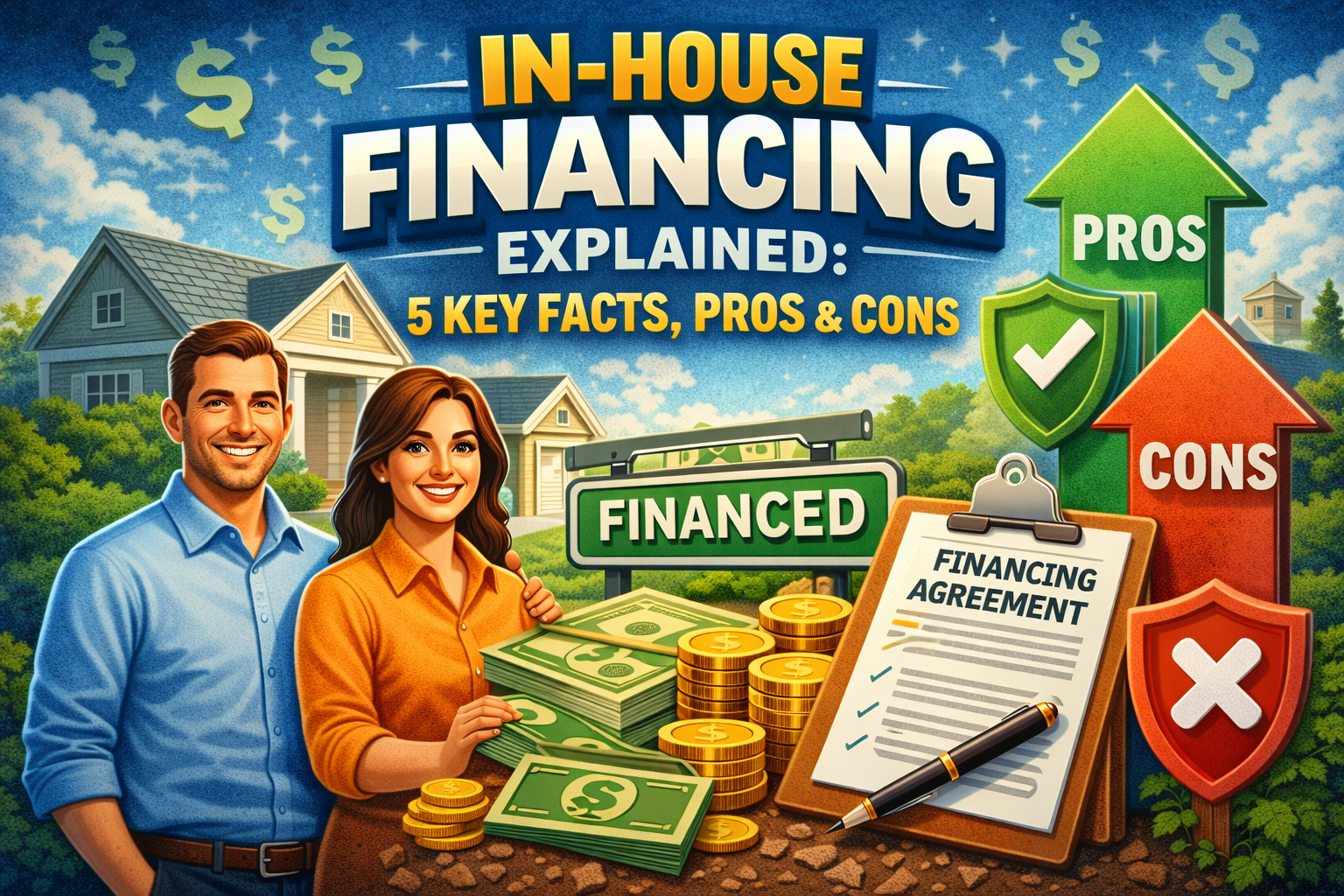
Explanation: Dealerships often have relationships with multiple lenders. When they run your application, they might send it to several banks to see who bites. Some dealerships even offer “in-house” financing, meaning they lend you the money themselves.
Benefits:
Convenience. You do everything in one place.
Dealerships are motivated to sell, so they often work hard to find a way to get you approved.
Access to manufacturer promotions or rebates.
Potential Drawbacks:
The dealer might mark up the interest rate to make a profit on the loan itself.
You might feel pressured to make a decision quickly.
ATV financing near me bad credit searches often lead here, but be sure to read the fine print on “Buy Here Pay Here” lots, as rates can be astronomical.
Credit Unions and Specialized Lenders
If big banks say no, these are your next best friends.
How they cater to you: Credit unions are non-profit organizations owned by their members. They are often more willing to listen to your story and look at the whole picture rather than just a number. Specialized lenders are companies that focus entirely on the subprime market (people with lower credit). They understand the unique challenges you face.
Tips for finding them:
Check with local credit unions in your area; you usually have to live or work nearby to join.
Look for online lenders who specifically advertise “powersports financing” or “bad credit loans.”
Rent-to-Own Programs
This is an alternative if traditional loans are completely out of reach.
Overview: In a rent-to-own program, you aren’t technically borrowing money to buy the ATV. You are renting it for a set period. A portion of your rental payment goes toward the purchase price. At the end of the term, you have the option to buy it outright.
Key Considerations and Risks:
No Credit Check: Often, they don’t check credit at all.
High Cost: You will end up paying significantly more than the ATV is worth—sometimes double or triple the sticker price.
Ownership: You don’t own the ATV until the very last payment is made. If you miss a payment, they can take it back immediately, and you lose everything you paid so far.
How to Qualify for Bad Credit ATV Financing
Getting approved isn’t just about luck; it’s about preparation. If you want to increase your odds and maybe even lower your rate, follow these steps.
Check and Improve Your Credit Score
Before you apply anywhere, you need to know where you stand. Ignorance is not bliss in finance.
Steps to review: Go online and get a free copy of your credit report. Look for errors. Is there a bill listed as “unpaid” that you actually paid? Dispute it.
Quick tips for improving: Pay down small balances if you can. Don’t open any new credit cards right before applying for the ATV loan. Every point counts. If you need a more detailed roadmap on how to tackle this. It walks you through fixing those errors and boosting your numbers, which is essential for qualifying for bad credit ATV financing.
Save for a Down Payment
We mentioned this earlier, but it deserves its own section. In the world of bad credit, cash is king.
Importance: A substantial down payment changes the math for the lender. If an ATV costs $10,000 and you have bad credit, asking for $10,000 is risky for them. But if you walk in with $3,000 cash, you are only asking for $7,000. You instantly become less risky. Plus, it shows you are serious and have discipline.
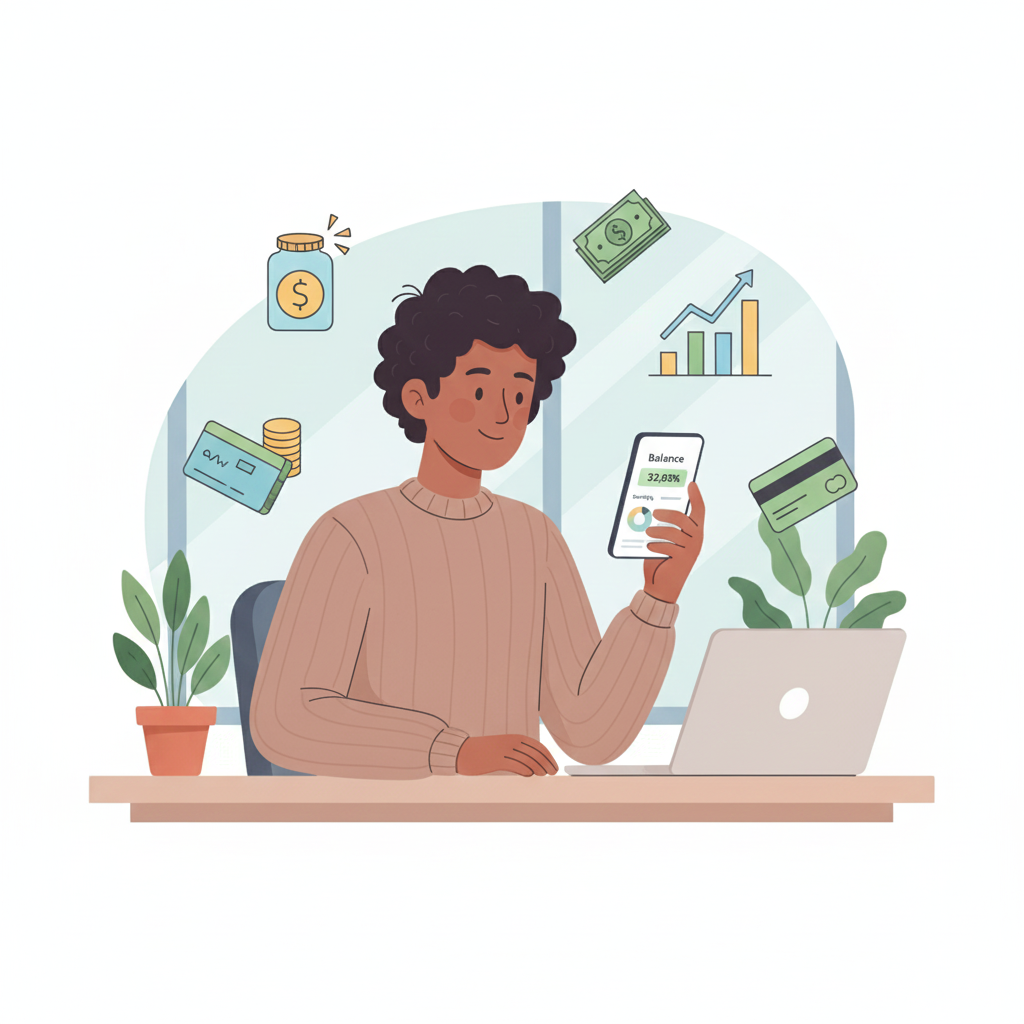
Savings Strategies: Start a dedicated savings jar or account. Cut out unnecessary subscriptions for a few months. Sell items you no longer use. Need help structuring this? Look at someBudgeting Tips to help you organize your finances so saving that down payment feels manageable rather than impossible.
Experts recommend making a down payment of at least 10–20% of the ATV’s price to lower the total loan amount and improve loan terms. :contentReference[oaicite:2]{index=2}
Example: How Credit Score and Down Payment Affect Approval
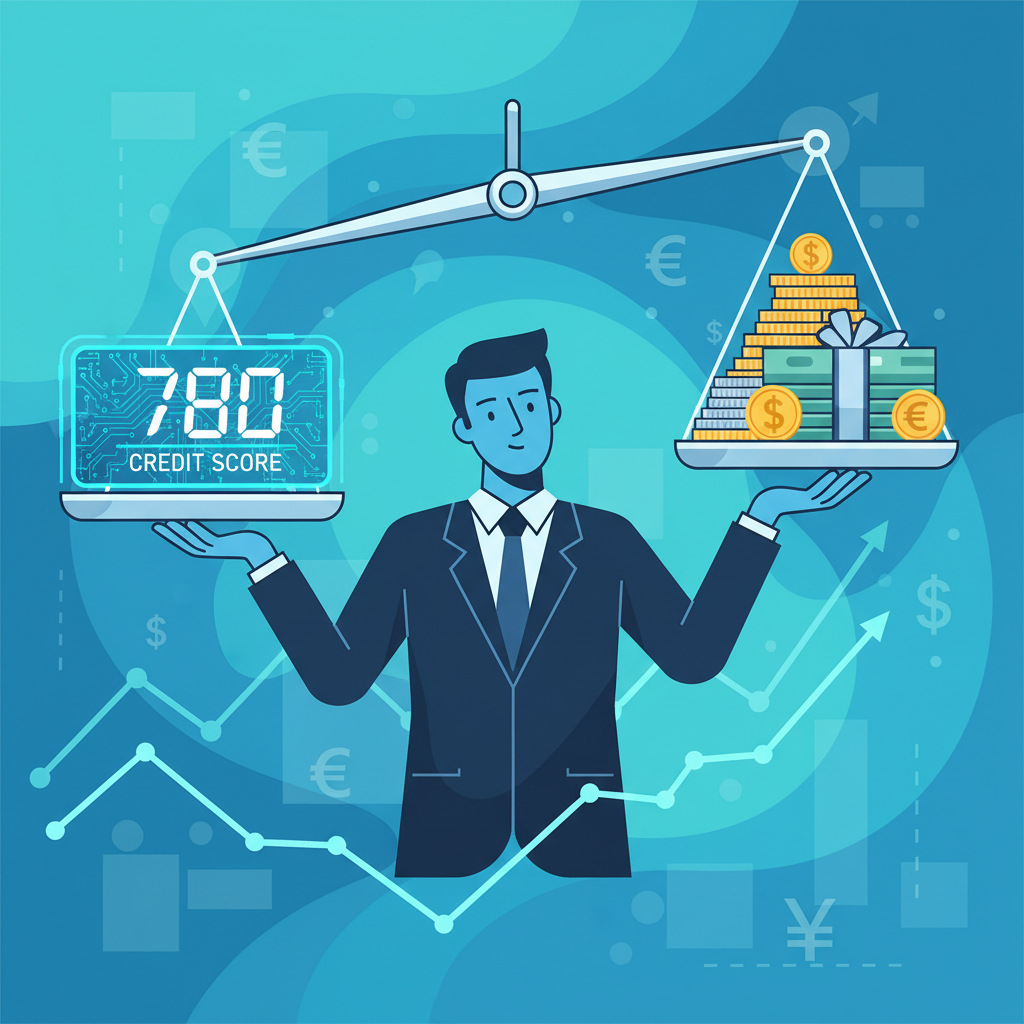
If your credit score is below 600, many lenders will view you as high risk. However, offering a 10–20% down payment and proof of steady income may help you qualify for a secured powersports loan. For instance, on a $6,000 ATV, a $1,200 down payment reduces the financed amount to $4,800 and may result in more favorable terms. :contentReference[oaicite:3]{index=3}
Gather Necessary Documentation
Nothing slows down an approval like missing paperwork. Lenders want to see proof, and they want to see it now.
The “Must-Have” List:
Valid Driver’s License: Make sure it isn’t expired.
Proof of Income: Recent pay stubs (usually the last 30 days) or bank statements if you are self-employed.
Proof of Residence: A utility bill (electric, water, or gas) in your name with your current address.
References: Some lenders ask for a list of personal references (friends or family) who don’t live with you.
Proof of Insurance: You will likely need to show you have insurance on the ATV before you can drive it off the lot.
Compare Lenders and Offers
Never take the first offer you see. It’s like buying the first car you test drive without looking at the price tag.
Research and Evaluate: Use the internet to your advantage. Search for “bad credit ATV financing rates” and see what the averages are. Apply to a few different places within a short window (usually 14 days) so it counts as a single inquiry on your credit report.
Negotiating: Yes, you can negotiate! If Lender A offers you 15% interest and Lender B offers 13%, tell Lender A. They might match it. Pay attention to the “APR” (Annual Percentage Rate) not just the monthly payment. A low monthly payment might just mean you are paying for longer, which costs you more in the end.
Pros and Cons of Bad Credit Financing for ATV
Let’s be real—taking out a loan with bad credit is a big decision. You need to weigh the good against the bad.
Pros
Accessibility The most obvious pro is that you get the ATV. Without these programs, many people would be shut out of the sport entirely. It democratizes the outdoors.
Opportunity to Build Credit This is the hidden gem. If you manage this loan responsibly, it serves as a stepping stone. A history of on-time payments on an installment loan looks great on a credit report. It shows future lenders (like mortgage brokers) that you can handle debt. It requires the right Financial Mindset to view this loan not just as a purchase, but as a credit-building tool.
Cons
Higher Interest Rates and Fees You will pay more than someone with good credit. Sometimes, significantly more. You might see interest rates of 15%, 20%, or even higher. Over the life of a 3-to-5-year loan, that adds up to thousands of extra dollars.
Risk of Default and Repossession The stakes are high. If you lose your job or have an emergency and can’t pay, the lender can take the ATV back. Repossession is devastating to your credit score, making it even harder to borrow money in the future. You need to be 100% sure you can afford the payments.
Real Risks and Limitations of Bad Credit ATV Financing
While lenders exist that consider applications with lower credit scores, there are trade-offs:
Interest rates are generally higher than loans for prime credit borrowers. :contentReference[oaicite:4]{index=4}
Loan terms may be shorter or have higher monthly payments. :contentReference[oaicite:5]{index=5}
Missing payments can further damage your credit.
Understanding these risks helps you make more informed decisions rather than assuming approval is easy.
Tips for Finding the Best Bad Credit ATV Financing
You are ready to look. How do you separate the good lenders from the bad ones?
Research Lenders Experience Look for companies that specifically mention “bad credit” or “subprime” financing on their website. General lenders might just waste your time with an automatic rejection.
Online Reviews and Testimonials Google is your friend. Search the lender’s name + “reviews.” Read what other people are saying. Did they have hidden fees? Was customer service rude? Did they change the terms at the last minute? If you see a pattern of complaints, run the other way.
Avoid Predatory Lenders Be wary of offers that seem too good to be true. “Guaranteed approval no matter what!” is often a red flag for loan sharks or scams with abusive terms. Legitimate lenders will always want to verify your income. If they don’t care if you have a job, they probably plan to make money by repossessing the vehicle or charging insane fees.
Consider Co-signers If your credit is really rough, ask a trusted family member or friend with good credit to co-sign. This basically means they promise to pay if you don’t. It lowers the risk for the lender, which usually gets you a much lower interest rate and a higher chance of approval. But be careful—if you miss a payment, you hurt their credit too.
Use Online Tools Use loan calculators to estimate your monthly payments before you talk to a salesperson. Input the price of the ATV, your down payment, and an estimated interest rate (aim high, like 15-18% for bad credit estimates). This gives you a reality check on what you can actually afford.
Final Thoughts on Bad Credit Financing for ATVs
Getting approved for bad credit financing for an ATV may be challenging, but it is possible with the right preparation. Lenders look at more than just your credit score, including income stability and down payment amount. Building a solid application, comparing lenders, and understanding loan terms can improve your chances and help you secure financing that fits your financial situation.
Quick Action Checklist for Bad Credit Financing
✔ Check your credit report and correct errors ✔ Build a small down payment (10–20%) ✔ Compare lenders specializing in bad credit loans ✔ Consider a co-signer to strengthen your application ✔ Avoid predatory “buy here, pay here” financing
Frequently Asked Questions
You’ve got questions, we’ve got answers. Here are the most common things people ask about getting an ATV with bad credit.
Can I get ATV financing with no credit history?
Yes, but it can be tricky. “No credit” is different from “bad credit.” Lenders simply don’t know you. You will likely need a strong proof of income and a larger down payment. First-time buyer programs at dealerships can be a good place to start.
What is the minimum credit score required for bad credit financing?
There isn’t one single “magic number.” Some subprime lenders will work with scores as low as 550 or even 500. However, scores below 580 will face the strictest terms and highest rates.
How much down payment is typically needed?
For bad credit, expect to put down at least 10% to 20% of the purchase price. If the ATV is $8,000, you should aim to have $800 to $1,600 in cash ready.
Are there any hidden fees in bad credit financing?
There can be. Watch out for “origination fees,” “processing fees,” or “prepayment penalties” (a fee for paying the loan off early). Always ask for a full breakdown of costs before signing.
Can I refinance my ATV loan later?
Absolutely. If you take a high-interest loan now, make payments on time for 12 months, and improve your credit score, you can apply to refinance with a different lender for a lower rate. This is a smart strategy to save money in the long run.
What happens if I miss a payment?
First, you will likely get hit with a late fee. If you miss a payment by more than 30 days, it will be reported to credit bureaus, hurting your score further. If you miss several payments, the lender may start the repossession process.
Are there specific ATVs that are easier to finance?
Newer models from major brands (Honda, Yamaha, Polaris) are sometimes easier to finance than older, used models because their value is easier to determine. However, cheaper used models require a smaller loan, which might be easier to get approved for overall.
How long does the financing process take?
It can be very fast. Dealer financing can sometimes be approved in an hour. Personal loans or credit unions might take 1 to 3 business days to process the paperwork and fund the loan.
Can I use bad credit financing for a used ATV?
Yes. Many lenders finance used vehicles, but they may have restrictions on how old the ATV can be (e.g., nothing older than 10 years) and mileage limits.
Will bad credit financing improve my credit score?
Only if the lender reports to the major credit bureaus (Equifax, Experian, TransUnion). Most reputable lenders do, but “Buy Here Pay Here” lots might not. Always ask: “Do you report my payments to the credit bureaus?” If the answer is no, it won’t help your score.
Sabir Abdirahman Mohamed is the founder of ThinkFixer and a personal finance and digital growth writer. He helps beginners learn how to save money, build online income streams, and grow blogs or businesses through practical SEO strategies. His content focuses on budgeting, smart money management, realistic ways to make money online, and step-by-step blogging guidance. His mission is to make financial and digital knowledge simple, actionable, and accessible for everyone.