Electric bills have increased in many areas in 2026 due to higher energy demand and rising utility rates. However, most households still waste between 10–30% of their electricity through inefficient habits and small home leaks. The good news is that lowering your electric bill does not require extreme lifestyle changes. In this guide, you’ll find practical, research-backed strategies that can realistically reduce electricity costs when applied consistently.
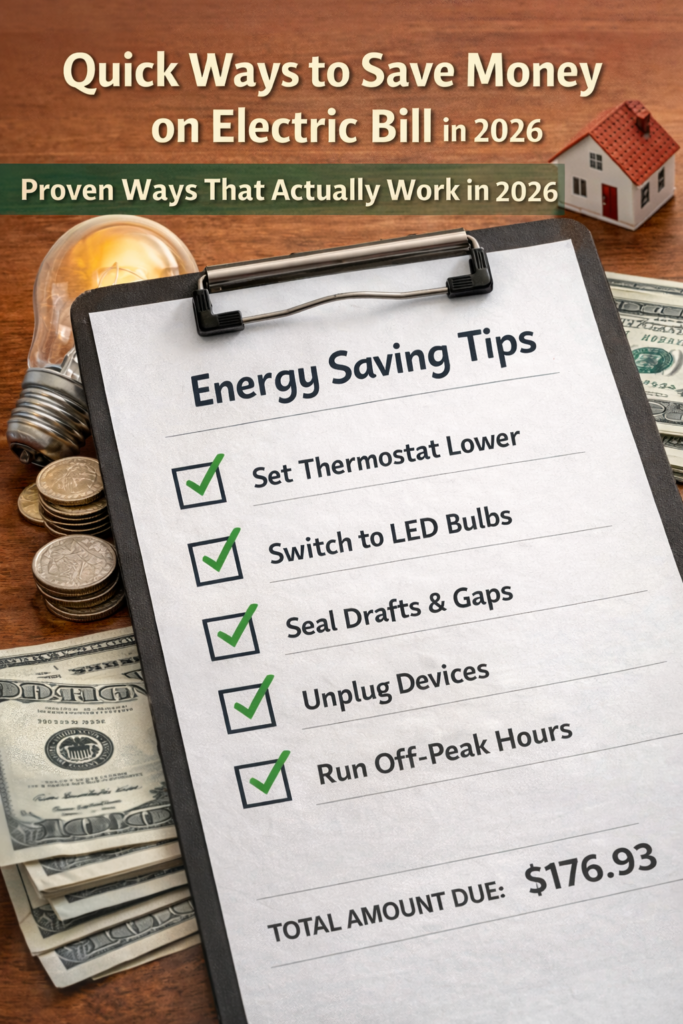
Quick Ways to Save Money on Electric Bill in 2026
Lower your thermostat by 2–3 degrees.
Switch your most-used lightbulbs to LEDs.
Seal cracks and gaps around windows and doors.
Unplug electronics you aren’t actively using.
Run large appliances like your dishwasher during off-peak hours.
Wash your clothes in cold water whenever possible.
When it’s time to replace an appliance, choose an energy-efficient model.
These are just a few smart saving strategies that can significantly reduce monthly expenses when applied consistently.
Table of Contents
Understand What’s Increasing Your Electric Bill (and How to Save Money on Electric Bill)
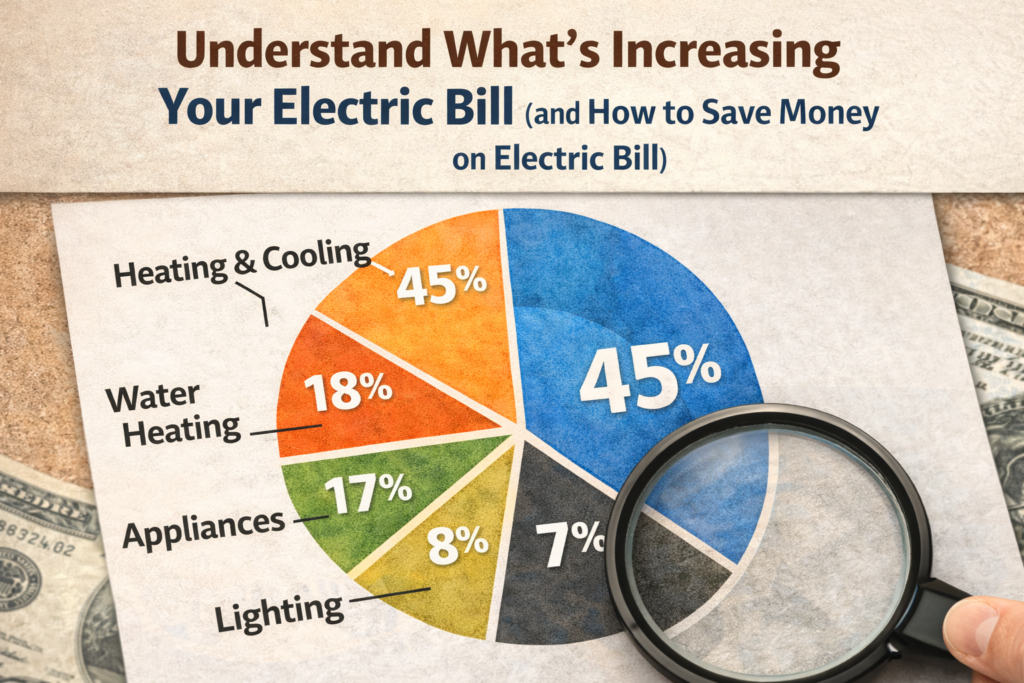
Before you can effectively reduce your electricity bill at home, you need to know where your money is actually going. It’s like trying to plug a leak without knowing where the water is coming from. For most homes, energy usage isn’t spread out evenly. A few key areas are responsible for the lion’s share of your monthly bill. Understanding the relationship between your income vs expenses is crucial, and the electric bill is a major expense you can control.
Here’s a typical breakdown of where your home’s energy goes:
Category
Average Percentage of Energy Use
Heating & Cooling (HVAC)
40% – 50%
Water Heater
15% – 20%
Appliances
15% – 20%
Lighting
5% – 10%
Electronics (Phantom Power)
5% – 10%
For more official guidance on cutting household power consumption, see the U.S. Department of Energy’s guide on reducing electricity use.
As you can see, your heating and cooling system is the biggest energy user by a long shot. This means that any changes you make to your thermostat habits will have the biggest impact on your bill. Right behind it are your water heater and major appliances like the refrigerator, washer, and dryer.
Finally, there’s “phantom power,” also known as standby power. This is the electricity consumed by electronics even when they are turned off but still plugged in. Think about your TV, coffee maker, or computer charger. That little light indicating it’s ready to go is constantly sipping energy, and it all adds up.
Adjust Your Thermostat the Smart Way
Since your HVAC system accounts for nearly half of your energy costs, managing your thermostat is the single most effective way to lower your electric bill. It’s not about being uncomfortable; it’s about being smart and finding a balance that saves you money without making you sweat or shiver. A few degrees can make a huge difference over the course of a year.
Best Temperature Settings for Summer
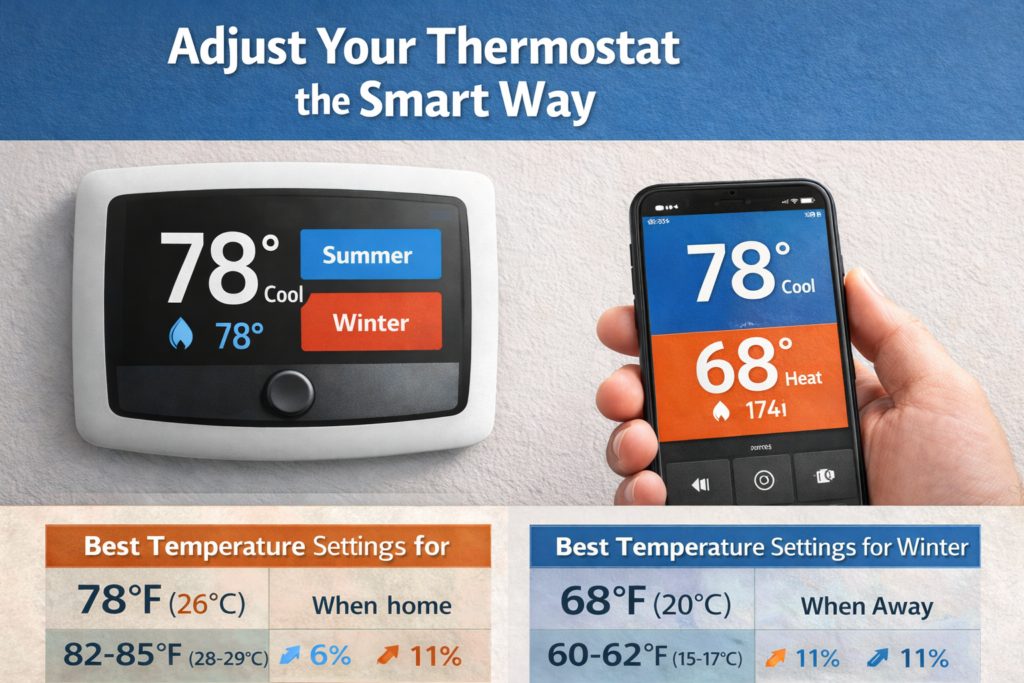
When the weather heats up, it’s tempting to crank the air conditioning down to arctic levels. However, every degree you lower the temperature significantly increases your energy consumption. According to guidance from the U.S. Department of Energy, setting your thermostat to around 78°F (26°C) in summer and 68°F (20°C) in winter can help balance comfort and efficiency.
This might sound warm, but your body can adapt. When you’re away from home or asleep, you can save even more by setting it a few degrees higher, around 82-85°F (28-29°C). The smaller the difference between the indoor and outdoor temperatures, the less your AC has to work, and the more you save.
Best Temperature Settings for Winter
During the colder months, the same logic applies in reverse. The recommended setting for your thermostat when you are home and awake is 68°F (20°C). It’s a comfortable temperature for most people, especially if you’re wearing a sweater or using a blanket.
When you go to sleep or leave the house, you can lower the temperature by another 5–10 degrees. Dropping it to around 60-62°F (15-17°C) overnight can cut your heating costs substantially. Your furnace or heat pump won’t have to fight as hard to maintain a high temperature, saving a significant amount of energy.
Should You Use a Smart Thermostat?
A smart thermostat is a game-changer for automating these adjustments. These devices learn your schedule and preferences, automatically adjusting the temperature for you when you’re asleep or away. They can also be controlled from your phone, so you can warm up or cool down the house just before you get home.
While there is an upfront cost, a smart thermostat can pay for itself in one to two years. Studies have shown they can save homeowners an average of 10-15% on heating and cooling costs. If you struggle to remember to adjust your thermostat manually, a smart one is a worthy investment.
Stop Wasting Energy With These Simple Home Fixes
Your home might be losing a lot of the precious warm or cool air you’re paying for. Air leaks and poor insulation force your HVAC system to work overtime to maintain a comfortable temperature. These simple, often low-cost fixes can seal up your home and keep your energy bills down.
Seal Air Leaks
Think of air leaks like leaving a window open all year round. Small cracks and gaps around windows, doors, electrical outlets, and pipes can add up to a significant amount of energy waste. You can find these leaks by holding a lit incense stick near potential problem areas on a windy day. If the smoke wavers, you’ve found a leak.
Sealing them is easy and cheap. Use caulk for small cracks around window frames and weatherstripping for the moving parts of doors and windows. These materials are available at any hardware store and can usually be applied in an afternoon. This simple fix can save you 10–20% on your heating and cooling costs.
Improve Insulation
Insulation acts like a blanket for your home, keeping it warm in the winter and cool in the summer. If your home is older, there’s a good chance its insulation isn’t up to modern standards, especially in the attic. Heat rises, so in the winter, a poorly insulated attic lets all that paid-for warmth escape. In the summer, the sun beats down on your roof, heating up the attic and radiating that heat down into your living space.
Checking your attic insulation is a great place to start. If you can see the tops of your ceiling joists, you probably need more. Adding insulation can be a DIY project or a job for a professional, but it offers one of the best returns on investment for energy savings.
Close Curtains Strategically
Your windows can be a source of unwanted heat gain in the summer and heat loss in the winter. Use your curtains to your advantage. During hot summer days, close curtains on south- and west-facing windows to block the sun’s intense rays. This can keep your home cooler and reduce the need for air conditioning.
In the winter, do the opposite. Open those same curtains during the day to let in free solar heat. Then, as soon as the sun starts to set, close them to trap that warmth inside and provide an extra layer of insulation against the cold night air.
Use Ceiling Fans Properly
Ceiling fans don’t actually cool the air; they just move it around to create a wind-chill effect that makes you feel cooler. In the summer, make sure your fans are rotating counter-clockwise. This pushes air straight down, creating a breeze that can allow you to raise your thermostat by about 4°F without feeling any less comfortable.
In the winter, you can reverse the fan’s direction to clockwise on a low speed. This will pull cool air up and push the warm air that has risen to the ceiling back down into the living area. Remember, a fan cools people, not rooms, so turn it off when you leave.
Reduce Appliance and Lighting Costs
After heating and cooling, your appliances and lights are the next biggest energy consumers. From your refrigerator to your phone charger, every device contributes to your bill. By making smart choices and changing a few habits, you can significantly reduce the costs associated with them.
Switch to LED Lighting
If you’re still using old incandescent lightbulbs, you’re essentially using tiny, inefficient heaters that happen to produce light. LED (Light Emitting Diode) bulbs use up to 90% less energy and last up to 25 times longer than their traditional counterparts.
While LEDs have a higher upfront cost, they save you money in the long run through lower energy bills and fewer replacements. Start by replacing the bulbs in your most-used fixtures, like in the kitchen and living room, to see the biggest impact first. The savings will quickly add up.
Upgrade to ENERGY STAR Appliances
When it’s time to replace an old appliance, look for the ENERGY STAR label. This is a government-backed symbol for energy efficiency. ENERGY STAR-certified appliances—from refrigerators and dishwashers to washers and dryers—are designed to use significantly less energy and water than standard models. An old refrigerator, for example, can be one of the biggest energy hogs in a home. Upgrading to a new, efficient model can save you hundreds of dollars over its lifetime.
Use Power Strips to Prevent Phantom Power
As we mentioned, phantom power from idle electronics can account for up to 10% of your electricity usage. Your TV, game console, computer, and coffee maker are all sipping energy 24/7. The easiest way to combat this is to plug these devices into a power strip. When you’re done using them, you can simply flip one switch to cut power to everything at once.
Smart power strips take this a step further. They can automatically cut power to devices that go into standby mode, saving you money without you even having to think about it. Also, ensure your devices are functioning correctly. Devices that stay plugged in longer than necessary — especially phones and laptops with charging issues — can slightly increase electricity usage over time. For example, if your iPhone remains stuck on the charging screen for hours, it may stay connected longer than needed. Fixing charging problems not only protects your device but also prevents unnecessary standby power use. You can follow this step-by-step iPhone charging fix guide to resolve that issue properly.
Run Appliances During Off-Peak Hours
Some utility companies offer “time-of-use” plans, where the price of electricity changes throughout the day. Electricity is most expensive during “peak hours”—typically late afternoons and early evenings when demand is highest. It’s cheapest during “off-peak” hours, usually overnight.
Check with your utility provider to see if you’re on such a plan. If you are, you can save a lot by shifting your energy-intensive tasks. Run your dishwasher, washing machine, and dryer late at night or early in the morning instead of right after dinner.
Does Turning Off Lights Really Save Money?
Yes, turning off lights absolutely saves money, but the impact depends heavily on the type of bulb you’re using. If you have old incandescent bulbs, turning them off for even a few minutes makes a difference because they waste so much energy as heat.
However, if you’ve switched to LEDs, the savings are much smaller because they are incredibly efficient. An LED bulb costs very little to run per hour. While it’s still a good habit to turn off lights when you leave a room, you don’t need to obsess over it. You’ll save far more money by adjusting your thermostat by one degree or sealing an air leak than you will by flicking a light switch. Focus your energy on the changes that provide the biggest returns.
How Much Can You Actually Save?
All these changes sound good in theory, but what do they mean for your wallet? The savings can be substantial, especially when you combine several strategies. Many people who feel overwhelmed by bills want to save money fast, and these changes deliver real results.
Here is a realistic breakdown of potential annual savings:
Thermostat Adjustments: Following the recommended temperature settings can save you up to 10% on heating and cooling, which often translates to $100–$300 per year.
Switching to LEDs: Replacing your home’s most-used incandescent bulbs with LEDs can save you around $75–$150 per year on your electricity bill.
Sealing Air Leaks: A well-sealed home can cut your heating and cooling costs by 10–20%, adding up to significant savings year after year.
Using Smart Power Strips: Eliminating phantom power can save the average household $50–$100 per year.
These numbers are estimates, but they show how small, consistent actions can lead to hundreds of dollars in savings annually.
Savings vary depending on your home size, local energy rates, climate, and usage habits. The figures above are general estimates based on average U.S. household energy consumption.
Long-Term Strategies to Lower Electric Bills
While the tips above offer immediate savings, there are also long-term investments you can make to slash your electric bills for years to come. These require a larger upfront cost but provide a massive return over time. These strategies are excellent money management tips for anyone serious about financial independence.
Solar Panels
Installing solar panels on your roof allows you to generate your own clean electricity. Depending on the size of your system and how much sun your home gets, you could reduce your electric bill dramatically or even eliminate it entirely. Many utility companies offer net metering programs, which credit you for any excess energy your panels send back to the grid. The cost of solar has dropped significantly, and with federal and state incentives, it’s more accessible than ever.
Home Energy Audit
A professional home energy audit is a top-to-bottom assessment of your home’s energy use. An auditor will use special equipment, like a blower door test and infrared cameras, to pinpoint exactly where you’re losing energy. They will provide you with a detailed report of recommended improvements, prioritized by which ones will save you the most money. It’s a great way to create a targeted plan for making your home as efficient as possible.
Energy-Efficient Windows
If your home has old, single-pane windows, you could be losing a tremendous amount of heat in the winter and gaining it in the summer. Upgrading to double- or triple-pane, energy-efficient windows provides superior insulation, reduces noise from the outside, and can cut your energy costs by 10-25% annually.
Check for Utility Rebates
Before you make any major upgrades, check your utility company’s website. Many providers offer rebates and financial incentives for purchasing energy-efficient appliances, smart thermostats, or even for adding insulation. These programs are designed to encourage energy conservation and can help offset the cost of your investment.
Conclusion
Lowering your electric bill doesn’t require drastic sacrifices. It’s about understanding where your money is going and making small, consistent changes that compound over time. Start with two or three strategies — such as adjusting your thermostat and sealing air leaks — and track your results for one billing cycle.
If you want to go further, learning how to stop wasting money across all areas of your life can dramatically improve your financial stability. You can also explore strategies to save money fast if you’re currently managing tight monthly expenses.
Frequently Asked Questions (FAQ)
How can I lower my electric bill quickly? The fastest way is to adjust your thermostat. Lowering it a few degrees in winter or raising it a few degrees in summer has the biggest and most immediate impact on your bill.
Does unplugging appliances save money? Yes, unplugging appliances or using a power strip saves money by eliminating “phantom power,” the energy devices use in standby mode. This can save the average family around $100 per year.
Does turning off AC save money? Turning off your AC when you leave the house saves money, but it can make your home very hot, forcing the system to work extremely hard to cool it back down. It’s often more efficient to just set the thermostat to a higher temperature (like 85°F) instead of turning it off completely.
Why is my electric bill so high suddenly? A sudden spike in your electric bill can result from seasonal temperature changes, higher usage of heating or cooling systems, rate adjustments by your utility provider, or malfunctioning appliances. Reviewing your monthly usage breakdown can help identify the cause.
What uses the most electricity in a house? Your heating and air conditioning (HVAC) system is by far the biggest energy user, accounting for almost half of your total electricity consumption. The water heater and refrigerator are typically next on the list.
Do smart thermostats really reduce bills? Yes. By automatically optimizing your heating and cooling schedule, smart thermostats can reduce your HVAC costs by 10-15% on average, paying for themselves within a couple of years.
Sabir Abdirahman Mohamed is the founder of ThinkFixer and a personal finance and digital growth writer. He helps beginners learn how to save money, build online income streams, and grow blogs or businesses through practical SEO strategies. His content focuses on budgeting, smart money management, realistic ways to make money online, and step-by-step blogging guidance. His mission is to make financial and digital knowledge simple, actionable, and accessible for everyone.