Why Most Blogs Fail to Make Money (The Real Reasons Nobody Talks About)
If you’ve ever wondered why most blogs fail to make money, you’re not alone. Many bloggers start with big dreams, only to find that turning content into income is harder than expected. This article reveals the real reasons behind blog income challenges — with honest, research-based insights that go beyond hype and clickbait.
Important Disclaimer
This article is for educational and informational purposes only. It does not guarantee income results or business success. Blogging success depends on niche choice, consistency, strategy, audience engagement, and many other factors. Always conduct your own research and consider multiple sources before making business decisions.
What Does It Mean for a Blog to Make Money?
Making money from a blog isn’t about a single magic button. It’s about creating multiple streams of income that grow over time. Think of it like a business with several product lines. Common ways bloggers generate revenue include placing display ads on their site, promoting products through affiliate marketing, or publishing sponsored posts.
Many bloggers also sell their own digital or physical products, like ebooks, online courses, or merchandise. Some even offer freelance services directly to their audience. The key is to have a plan. If you’re new to this world, a great starting point is to explore a beginner’s guide to Earn Money Blogging to see what’s possible.
Table of Contents
Why Most Blogs Fail to Make Money (The Real Reasons)
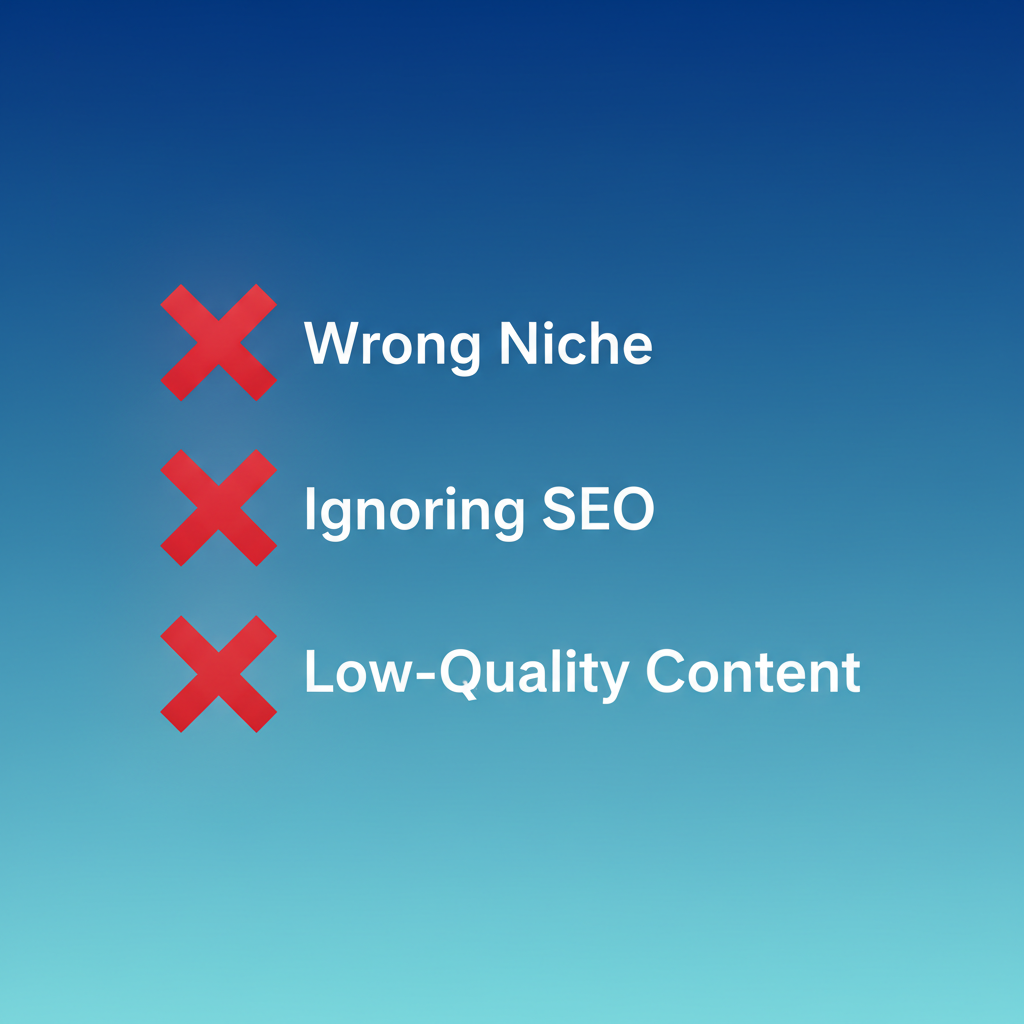
Despite blogging being more accessible than ever, the reality is that most blogs fail to make money because of repeatable, strategic mistakes. These failures are not random. They happen because many bloggers treat blogging as a hobby instead of a business. Below are the most common reasons blogs fail — and how you can fix each one.
1. No Clear Monetization Strategy
One of the biggest reasons most blogs fail to make money is the lack of a clear monetization plan. Many bloggers start writing content without deciding how the blog will eventually earn income. They add ads too early, promote random affiliate links, or hope money will magically appear.
How to fix this: Choose one primary monetization method at the start — such as affiliate marketing, display ads, or selling a digital product — and create content that supports that goal.
Real-life example: A beginner food blogger fills their site with recipes but never recommends kitchen tools, courses, or cookbooks. Another food blogger writes recipe posts that naturally include affiliate links to cooking tools — and earns consistently from the same traffic.
2. Choosing the Wrong Blog Niche
Another reason why most blogs fail to make money is choosing a niche with low buying intent. Passion alone does not pay the bills. If people in your niche are not spending money, monetization becomes extremely difficult.
How to fix this: Pick a niche where people already spend money — such as personal finance, health, education, technology, or online business.
Real-life example: A blog about “daily personal thoughts” struggles to earn income, while a blog focused on “budgeting for beginners” attracts readers who are actively looking for financial solutions and tools.
3. Ignoring SEO and Search Traffic
Many bloggers rely only on social media for traffic and completely ignore search engines. Unfortunately, social traffic disappears quickly, while SEO traffic compounds over time. This is a major reason blogs fail to make money long-term.
How to fix this: Learn basic SEO, target low-competition keywords, and write content that answers specific search questions.
Search engines remain one of the most reliable traffic sources for blogs. According to Ahrefs’ beginner SEO guide, blogs that focus on search-driven content are more likely to generate consistent long-term traffic than those relying only on social media.
SEO (Search Engine Optimization) means optimizing your content so that search engines like Google better understand and rank it. This includes using the right keywords, fast site speed, mobile-friendly design, clean site structure, and quality backlinks.
4. Publishing Generic or Low-Value Content
If your content looks the same as hundreds of other blog posts, Google has no reason to rank it — and readers have no reason to trust it. Generic content is one of the silent killers of blog income.
How to fix this: Add personal insights, step-by-step processes, real examples, and actionable advice that readers can apply immediately.
Real-life example: Instead of writing “How to Save Money,” a stronger post would be “How I Saved $500 in 30 Days Using a Simple Budget System.”
5. No Email List or Audience Ownership
Blogs that rely only on traffic and do not build an email list struggle to monetize. When visitors leave your site and never return, income opportunities disappear.
How to fix this: Offer a simple free resource (checklist, PDF, mini-guide) and start collecting emails early.
Email marketing consistently outperforms social media in terms of conversion. According to OptinMonster, email lists give bloggers direct access to their audience and higher monetization potential over time.
6. Giving Up Too Early
Many bloggers quit just before success happens. Blogging income is slow at the beginning, and impatience causes most failures.
How to fix this: Commit to at least 12 months of consistent publishing and promotion before judging results.
Real-life example: Many successful bloggers report earning nothing in their first year but reaching steady income in year two once traffic and trust compound.
The Importance of Setting Realistic Expectations
One of the biggest hurdles for new bloggers is managing expectations. It’s easy to see success stories and assume you can earn a full-time income in just a few months. The truth is that building a profitable blog is a marathon, not a sprint. It takes time, consistent effort, and a tremendous amount of patience.
Blogging income typically grows gradually because search engines take time to trust new domains. It often requires consistent publishing, audience engagement, and content optimization over several months before meaningful traffic develops.
Think of your blog like a small seed. You have to plant it, water it regularly, and protect it from pests. It won’t become a towering tree overnight. Most successful bloggers work for at least a year or more before seeing significant income. Setting realistic goals will help you stay motivated and prevent you from giving up just before you start seeing results.
Common Mistakes That Prevent Blogs from Making Money
Beyond unrealistic expectations, several specific blogging income mistakes can derail your efforts before they even get off the ground. Understanding these pitfalls is crucial for navigating your journey. The common reasons blogs fail often fall into predictable categories that are entirely avoidable with the right knowledge.
💡 Self-Assessment: Ask yourself: ✔ Do I have a content schedule? ✔ Am I tracking traffic and conversions? ✔ Do I know who my target audience is? ✔ Have I monetized with more than one method?
First, many beginners choose the wrong niche. They either pick a topic they aren’t passionate about, which leads to burnout, or they enter a market with no monetization potential. If no one is spending money in your niche, you won’t make any.
Second is ignoring Search Engine Optimization (SEO). You can write the best content in the world, but if no one can find it through a Google search, it’s like shouting into the void. Proper keyword research and on-page optimization are non-negotiable for driving organic traffic.
Third, there’s the trap of focusing on quantity over quality. Publishing a dozen mediocre posts is far less effective than publishing three or four high-value, well-researched articles that truly help your readers.
Another critical error is neglecting your audience’s needs. Are you solving their problems? Are you answering their questions? If your content is all about you, you’ll struggle to build a loyal following.
Finally, a poor website design can kill your chances. A slow, confusing, or mobile-unfriendly site will frustrate visitors and send them clicking away. Your blog’s user experience is just as important as your content. These are just some of the fundamental Blogging Mistakes new creators make that kill their traffic and income potential.
Why Some Blogs Succeed While Most Fail
If blogging didn’t work, no blogs would make money — but that’s not the case. The difference is strategy, not luck.
Successful blogs:
Treat blogging as a business
Focus on solving specific problems
Build traffic through SEO
Monetize intentionally
Stay consistent for years, not weeks
Failed blogs:
Write without direction
Chase trends
Ignore SEO
Quit too early
How to Choose a Profitable Blog Niche
Choosing the right niche is arguably the most important decision you’ll make as a blogger. It sets the foundation for everything that follows—your content, your audience, and your income. A great niche sits at the intersection of three things: your passion, audience demand, and profitability.
Identify Your Interests and Expertise: Start by brainstorming topics you genuinely enjoy. What could you talk about for hours? What problems have you solved for yourself or others? Your enthusiasm will shine through in your writing and keep you motivated for the long haul.
Research Market Demand: Passion isn’t enough. You need an audience. Use tools like Google Trends or keyword research tools (even free ones) to see if people are actively searching for information related to your topic. Look at forums like Reddit or Quora to find questions people are asking.
Evaluate Monetization Potential: Once you know there’s demand, figure out how you’ll make money. Are there affiliate products you can promote? Can you create a digital product like an ebook or course? Look at other blogs in the potential niche. Are they running ads? Do they have sponsored posts? Seeing others succeed is a good sign that the market is profitable.
How to Create High-Quality, Monetizable Content
Your content is the heart of your blog. It’s what attracts readers, builds trust, and ultimately drives income. “High-quality” doesn’t just mean well-written; it means valuable. It has to serve a purpose for your audience. If you’re facing blog income problems, your content is the first place to look.
First and foremost, aim to solve your audience’s problems. Every piece of content you create should answer a question, teach a skill, or provide a solution. Think of your reader asking, “What’s in it for me?” Your content is the answer. Use your headlines to clearly communicate this value. A title like “How to Start a Budget” is much more effective than “My Thoughts on Budgeting.”
Write in a clear, beginner-friendly tone. Avoid industry jargon and complex language. Use analogies and simple examples to explain difficult concepts. Break up long paragraphs into short, scannable chunks. Use headings, subheadings, and bullet points to make your articles easy to read on any device.
Finally, always write with SEO in mind. This means including relevant keywords naturally in your titles, headings, and body text. It helps search engines understand what your content is about and show it to the right people. Great content that no one can find is a common reason why my blog is not making money.
Building and Growing Your Blog Audience
Creating great content is only half the battle. The other half is getting it in front of people. Without an audience, you have no one to monetize. Building an audience is an active process that requires a consistent strategy and a bit of patience.
One of the most effective ways to get your first readers is through social media. Share your articles on platforms where your target audience hangs out. It could be Pinterest for visual niches, LinkedIn for professional topics, or Facebook groups for community-focused subjects. Don’t just drop links; engage in conversations and provide value.
Building an email list from day one is also critical. Your email list is one of the few assets you truly own. Unlike social media followers, you have a direct line of communication with your subscribers. Offer a valuable freebie, like a checklist or a mini-guide, in exchange for their email address. Then, nurture that relationship by sending them your best content and exclusive tips.
Engage with your readers wherever you can. Respond to every comment on your blog posts. Participate in relevant forums and online communities. By being helpful and present, you position yourself as an authority and build a loyal following.
As you grow, consider collaborating with other bloggers in your niche. You can write guest posts for their blogs, participate in joint webinars, or simply promote each other’s content. This allows you to tap into their established audience and accelerate your own growth.
Monetization Strategies for Beginner Bloggers
Once you have a steady stream of traffic, it’s time to focus on monetization. There are many ways to make money from a blog, and you don’t have to pick just one. In fact, the most successful bloggers diversify their income streams.
For complete beginners, display advertising is often the easiest entry point. Services like Google AdSense allow you to place ads on your site and earn a small amount of money every time a visitor sees or clicks on them. It won’t make you rich overnight, but it’s a start. For a deeper dive, this Google AdSense Guide is a fantastic resource.
Affiliate marketing is another popular and highly effective strategy. This involves recommending products or services you love and earning a commission for any sales generated through your unique affiliate link. The key is to only promote products that are genuinely helpful and relevant to your audience. This builds trust and leads to higher conversion rates.
As you become more established, you can create and sell your own digital products. This could be an ebook, a printable planner, an online course, or a workshop. This method has the highest profit margin because you keep nearly all of the revenue.
You can also offer freelance services related to your niche. If you blog about graphic design, you could offer design services. If you write about personal finance, you could offer one-on-one budget coaching.
Finally, as your traffic grows, you may get opportunities for sponsored content. This is where a brand pays you to write an article or create a video featuring their product. Authenticity is key here to maintain your audience’s trust.
How to Avoid Burnout and Stay Consistent
Blogging is a long game, and burnout is a real threat. The initial excitement can fade when you’re months in and not seeing the results you hoped for. The key to long-term success is finding a sustainable pace and building systems that support your consistency.
Start by setting realistic goals and creating a content schedule you can stick to. It’s better to publish one high-quality post per week consistently than to publish five posts one week and then nothing for a month. A consistent schedule trains your audience to know when to expect new content from you.
Celebrate your small wins along the way. Did you get your first 100 visitors? Your first email subscriber? Your first blog comment? Acknowledge and appreciate these milestones. They are proof that you are making progress. Building a solid Money Routine can also help manage the financial side of your blog, reducing stress and helping you stay focused.
For example, if a blog earns $10 per 1,000 page views (RPM), reaching $500 per month would require approximately 50,000 monthly views. For new blogs, reaching that traffic level can take 6–12 months or longer depending on niche and competition.
Don’t be afraid to outsource tasks as you grow. If you hate designing graphics or managing social media, consider hiring a freelancer to handle it. Freeing up your time allows you to focus on what you do best: creating amazing content.
Case Studies: Successful Blogs and What They Did Right
Learning from those who have already succeeded can provide a powerful roadmap. Let’s look at a few examples of successful blogs and break down what they did right.
1. NerdWallet: This blog started as a simple comparison spreadsheet for credit cards. Today, it’s a personal finance powerhouse.
Niche and Audience: Their niche is personal finance, targeting everyday consumers looking for clear, unbiased advice on credit cards, banking, investing, and mortgages.
Monetization Strategy: Their primary income source is affiliate marketing. When a reader signs up for a credit card or opens a bank account through their links, they earn a commission.
Lesson for Beginners: They succeeded by relentlessly focusing on solving a specific problem: helping people choose the best financial products. Their content is incredibly detailed, data-driven, and trustworthy, which is why both users and search engines love them.
2. Pinch of Yum: This started as a hobby food blog by a teacher named Lindsay. It has since grown into a massive business with millions of monthly visitors.
Niche and Audience: The niche is food and recipes, targeting home cooks looking for delicious, approachable meals.
Monetization Strategy: They use a mix of display advertising (through an ad network called Adthrive), affiliate marketing (for kitchen tools and ingredients), and selling their own products (like an ebook on food photography).
Lesson for Beginners: They built a strong community by sharing not just recipes, but also personal stories. Their high-quality photography was a key differentiator that made their content stand out. They also transparently shared their income reports, which helped build trust and attract a loyal following of aspiring bloggers.
These examples show that success comes from a deep understanding of a target audience and a clear strategy for serving and monetizing that audience.
Why Blog Income Is Hard (Real Challenges)
While blogging can be rewarding, it’s important to understand real obstacles such as:
Slow SEO growth that takes 6–12+ months
Algorithm changes that affect traffic unpredictably
Time required for audience trust and authority building
Competition in popular niches
Acknowledging these challenges helps bloggers create realistic plans rather than expecting overnight success.
Final Thoughts: How to Make Blogging Work for You
Understanding why most blogs fail to make money helps you avoid common pitfalls and build a smarter, more resilient strategy. Successful blogs focus on audience needs, consistent publishing, thoughtful SEO, diversified monetization, and real value creation.
Blogging is not a get-rich-quick project — but with dedication, strategic planning, and ongoing optimization, it can become a reliable online income stream over time.
Frequently Asked Questions
1. How long does it take to make money from a blog? It varies greatly, but most bloggers start earning their first few dollars within 6 to 12 months. Earning a significant or full-time income often takes 2 to 3 years of consistent effort.
2. Do I need to invest money to start a blog? You can start a blog for very little money. The only essential costs are a domain name (about $15/year) and web hosting (starting around $3-$5/month). While free platforms exist, owning your domain and hosting gives you full control and looks more professional.
3. What are the best platforms for beginner bloggers? For serious bloggers who want to monetize, a self-hosted WordPress.org site is the industry standard. It offers the most flexibility, control, and monetization options.
4. How much traffic do I need to make money? This depends on your monetization method. For display ads, you’ll generally need at least 10,000 monthly pageviews to earn a noticeable amount. For affiliate marketing or selling your own products, you can start making money with a smaller, highly engaged audience of just a few hundred loyal readers.
5. Can I monetize a blog without ads? Absolutely. Many successful blogs make all of their income from affiliate marketing, selling digital products, or offering services, without running a single ad.
6. How do I find affiliate programs to join? You can join large networks like Amazon Associates, ShareASale, or Commission Junction. You can also search for “[your niche] + affiliate program” to find independent programs from companies in your industry.
7. What tools do I need to start a blog? At a minimum, you need a domain, hosting, and WordPress. As you grow, you may want to invest in a premium theme, an email marketing service (like ConvertKit or MailerLite), and a keyword research tool (like Ahrefs or SEMrush).
8. How often should I post new content? Consistency is more important than frequency. Aim for at least one high-quality, in-depth post per week. If you can do more without sacrificing quality, that’s great.
9. Is it possible to blog part-time and still make money? Yes, many successful bloggers start and grow their blogs while working full-time jobs. It requires excellent time management and dedication, but it is entirely possible.
10. What are the biggest challenges beginner bloggers face? The biggest challenges are staying consistent when results are slow, overcoming the technical learning curve, and learning how to effectively promote content to drive traffic.
Sabir Abdirahman Mohamed is the founder of ThinkFixer and a personal finance and digital growth writer. He helps beginners learn how to save money, build online income streams, and grow blogs or businesses through practical SEO strategies. His content focuses on budgeting, smart money management, realistic ways to make money online, and step-by-step blogging guidance. His mission is to make financial and digital knowledge simple, actionable, and accessible for everyone.