What Is In-House Financing? How It Works, Benefits, and Risks Explained
Have you ever been turned down for a loan by a bank? It’s a frustrating experience many people face. Maybe a low credit score is making it hard to get the financing you need, or the long approval processes from traditional lenders just don’t work for your timeline. When you need to buy a car, new furniture, or even get a medical procedure done quickly, waiting for a bank can feel like an eternity.
What if there was a more direct way to get the funds you need, right from the business you’re buying from? This is where in house financing comes in. In this guide, you’ll learn what in-house financing is, how it works, when it makes sense, and the pros and cons you should know before choosing this type of financing.
Many people search for the in house financing meaning when they encounter this option at car dealerships or retail stores. In simple terms, it refers to seller financing, where the business itself acts as the lender instead of relying on banks or third-party financial institutions.
Table of Contents
What Is In House Financing? Simple Definition and Examples
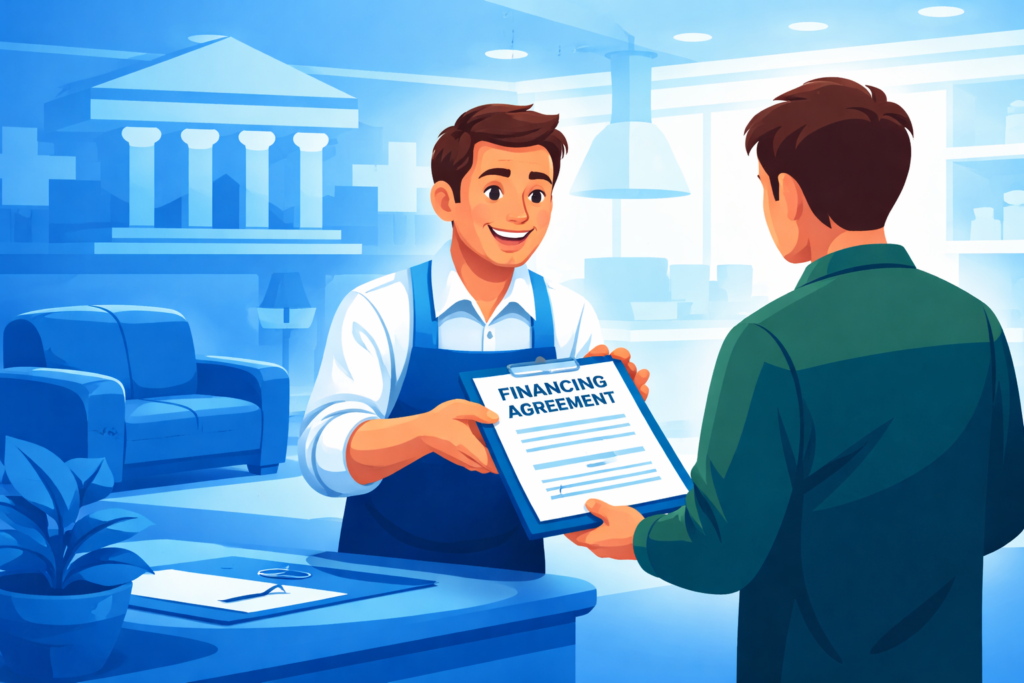
So, what is in-house financing? Put simply, it’s when a business offers its own loans directly to customers to help them buy its products or services. Instead of sending you to a bank or an outside lender, the store itself acts as the lender.
Think of it like this: a bank loan is like asking a friend’s parent for money to buy a bike from a store. In-house financing is like the bike shop owner saying, “Don’t worry about the full price today. You can pay me back in smaller amounts over the next year.” The entire transaction—the product and the loan—happens in one place.
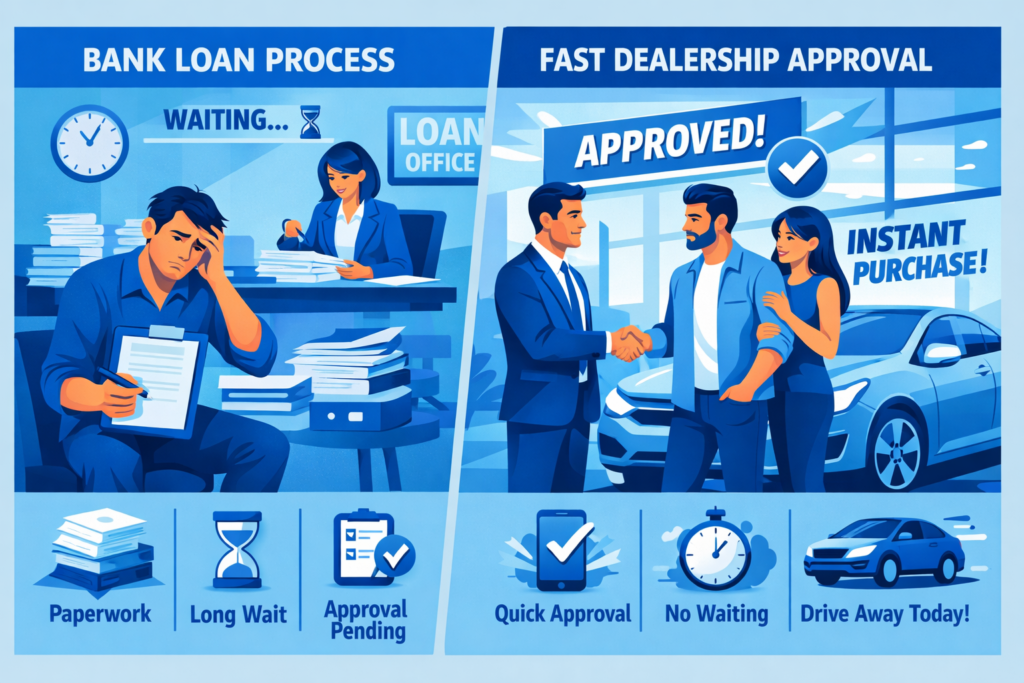
This approach is different from a traditional bank loan, where you first get approved for a loan from a financial institution and then use that money to make your purchase. With in-house financing, the sale and the loan are bundled together. This model has become popular because it streamlines the buying process and opens up purchasing power to people who might not qualify for conventional loans.
In many cases, in-house financing is similar to what financial experts call seller financing, where the seller provides the loan directly to the buyer instead of relying on a bank or third-party lender. A detailed explanation of this concept can be found onInvestopedia, a trusted financial education platform.
How In House Financing Works (Step-by-Step Guide)
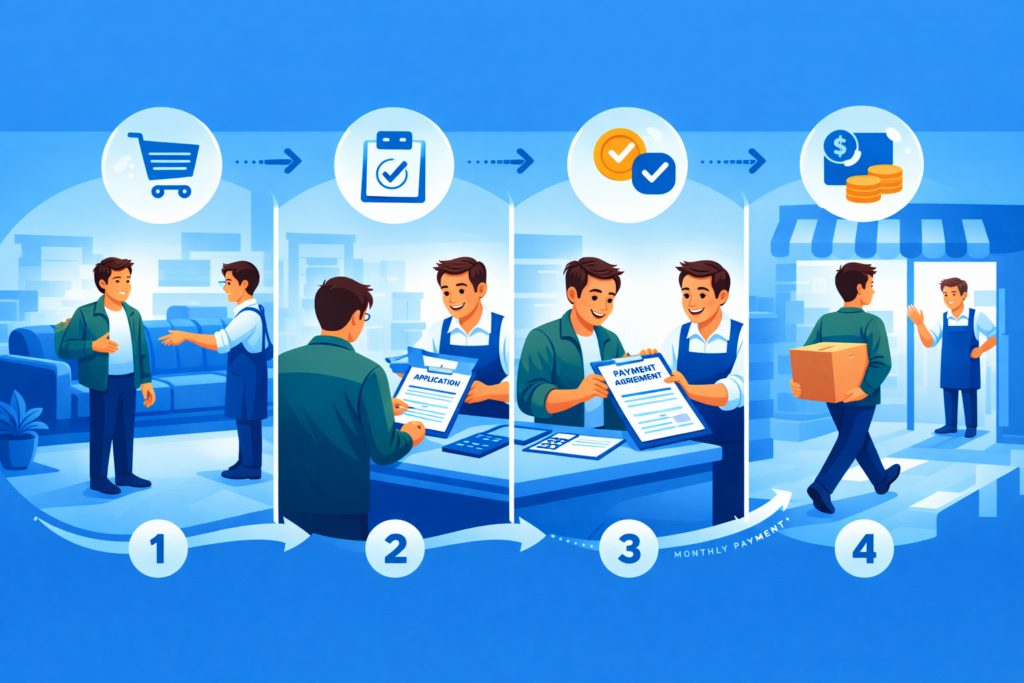
The process for getting in-house financing is usually straightforward and much quicker than dealing with a bank. Here’s a step-by-step look at how it typically works:
You Select a Product or Service: You start by shopping for what you need, whether it’s a car, a new sofa, or braces from an orthodontist.
The Seller Offers a Financing Option: Once you’ve decided on your purchase, the seller will present you with their financing plan. This is often part of the sales conversation, especially for larger purchases.
You Apply for Financing: You’ll fill out an application, which is usually simpler than a bank loan application. While some businesses will run a credit check, many are known for more flexible approval requirements. Some may not check your credit at all, focusing instead on your income and ability to make payments.
You Agree to a Payment Plan: If approved, the business will give you a contract that outlines the terms of the loan. This includes the total cost, the interest rate, your monthly payment amount, and the length of the loan term.
You Make Payments Directly to the Seller: Instead of paying a bank each month, you’ll send your payments directly to the business where you made the purchase.
This process is a form of buy now pay later financing, allowing you to take your purchase home immediately while spreading the cost over time. It’s commonly found at car dealerships, furniture stores, and even some medical clinics.
In some industries, in-house financing is also called dealer financing or buy here pay here financing, especially in the automotive market. These financing models allow buyers to secure a purchase even when they have poor or limited credit history.
In House Financing Examples
A common in-house financing example is when a car dealership allows customers to buy a vehicle and make payments directly to the dealership instead of taking a loan from a bank.
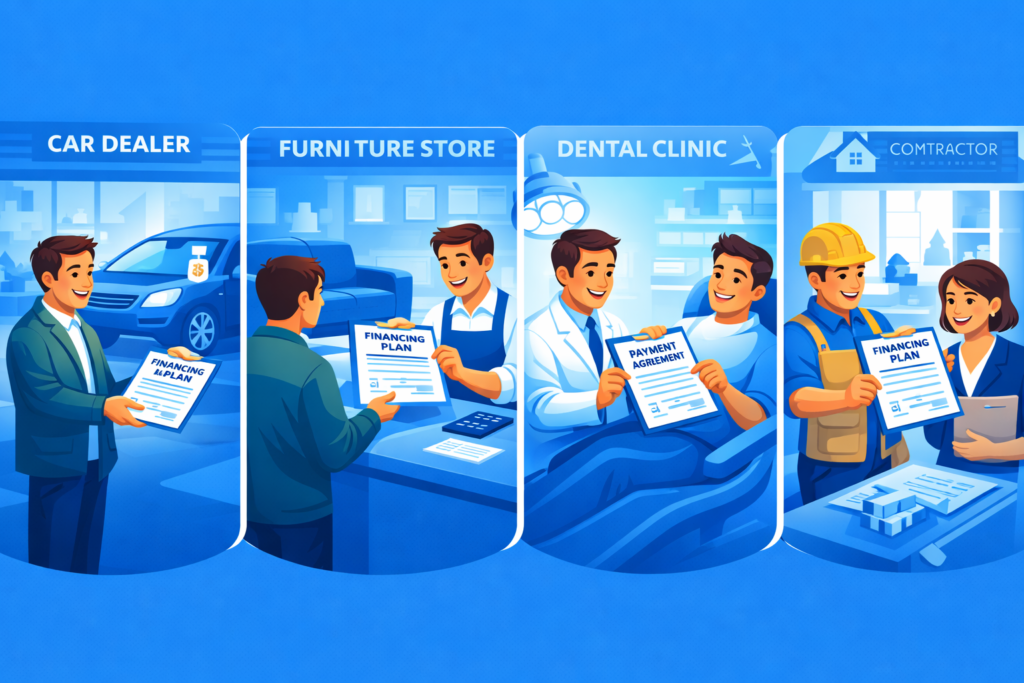
You might have come across in-house financing without even realizing it. It’s offered in many different industries. Here are some common in-house financing examples:
Car Dealership Financing
This is one of the most well-known examples. Many car dealerships, especially those known as “buy-here-pay-here” (BHPH) lots, offer their own financing. They cater to customers who may have been denied a traditional auto loan due to poor or no credit. You buy the car and finance it all at the same location, making your weekly or bi-weekly payments directly to the dealership.
Furniture Store Financing
Need a new living room set but don’t have the cash upfront? Many large furniture and appliance stores offer in-house financing. They let you take your items home right away and pay for them through an installment plan. These plans can range from a few months to a few years, making it easier to furnish your home without emptying your savings account.
Medical or Dental Financing
Some medical and dental procedures can be expensive and aren’t always fully covered by insurance. To help patients manage these costs, clinics for services like orthodontics, cosmetic surgery, or laser eye surgery may offer their own payment plans. This allows patients to get the care they need immediately and pay for it over time.
Home Improvement Financing
If you’re hiring a contractor for a big project like a kitchen remodel or a new roof, they might offer financing directly. This helps homeowners start projects sooner without having to secure a separate home improvement loan from a bank. The payments are made to the contracting company according to the agreed-upon schedule.
Common Industries That Offer In-House Financing
In-house financing is offered in many industries where purchases can be expensive for customers to pay upfront. By providing financing options directly, businesses make their products and services more accessible to a wider range of buyers.
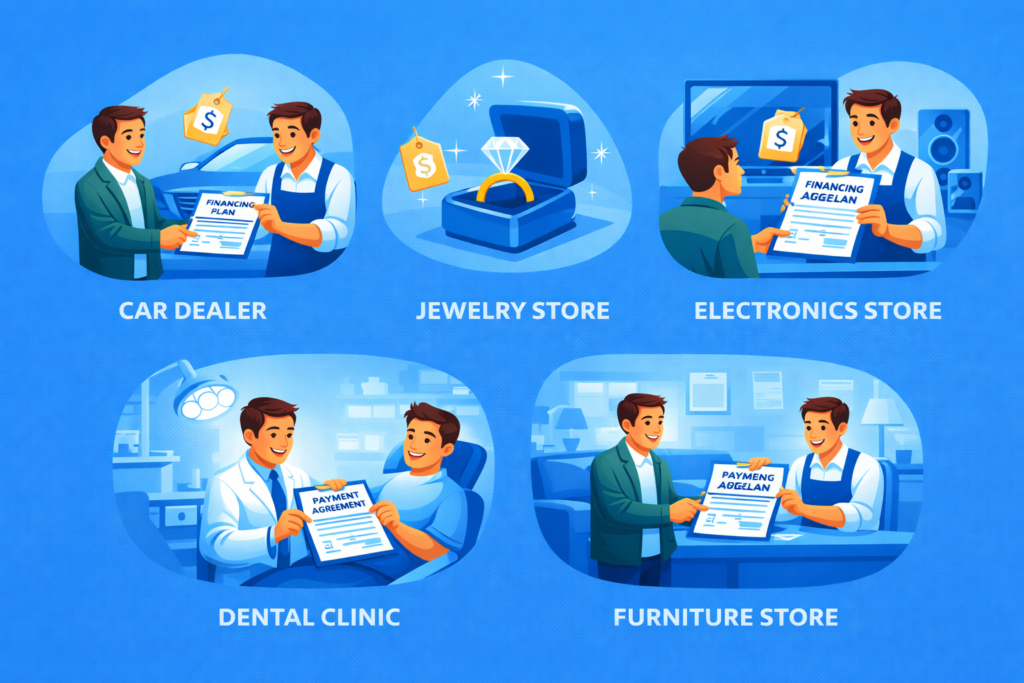
Here are some of the most common industries that offer in-house financing.
Car Dealerships
Car dealerships are one of the most well-known providers of in-house financing. Many dealerships offer what is known as buy-here-pay-here financing, allowing customers with poor credit to purchase vehicles and make payments directly to the dealer.
Furniture Stores
Furniture retailers often provide installment plans so customers can furnish their homes without paying the full cost upfront. These financing plans usually allow buyers to pay monthly over several months or years.
Jewelry Stores
Many jewelry stores offer in-house financing for engagement rings, wedding rings, and luxury jewelry. This helps customers manage the high cost of these purchases through manageable monthly payments.
Electronics Stores
Some electronics retailers offer financing options for expensive devices like televisions, laptops, and home entertainment systems. These payment plans make technology purchases more affordable.
Dental and Medical Clinics
Medical and dental clinics sometimes provide financing for treatments that insurance may not fully cover. Procedures like orthodontics, cosmetic dentistry, and laser eye surgery often come with in-house payment plans.
Cosmetic Surgery Clinics
Cosmetic procedures can be expensive, so many clinics provide in-house financing to allow patients to spread the cost over time instead of paying the full amount upfront.
In House Financing Pros and Cons
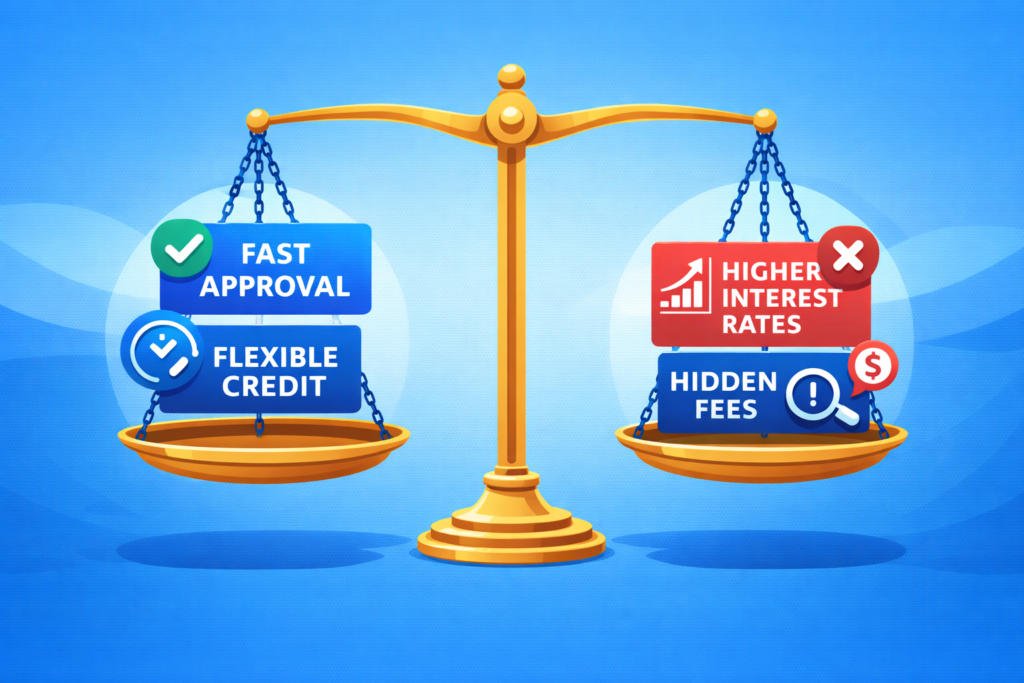
Like any financial product, in-house financing has its own set of benefits and drawbacks. It’s important to weigh the in-house financing pros and cons before making a decision.
Advantages
Easier Approval, Even with Bad Credit: This is the biggest draw for many people. Businesses that offer in-house financing are often more willing to work with individuals who have low credit scores or a limited credit history. Their primary goal is to make a sale, so their approval criteria are usually less strict than a bank’s.
Faster and More Convenient: The entire process happens in one place. You can choose your product, get approved for financing, and complete your purchase in a single visit. There’s no need to go back and forth between a lender and a seller.
Flexible Terms: Because you are dealing directly with the seller, there may be more room for negotiation on the down payment or payment schedule. They might be able to structure a plan that better fits your budget.
One-Stop Shop: The convenience of handling the purchase and financing at the same time simplifies the buying experience. You have one point of contact for any questions about the product or the loan.
Disadvantages
Higher Interest Rates: Convenience often comes at a cost. Interest rates for in-house financing are typically higher than traditional bank loans. According to consumer finance reports, buy-here-pay-here dealerships may charge APR rates between 15% and 29%, compared to 6%–12% for traditional auto loans.Sellers take on more risk by lending to individuals with poor credit, and they offset that risk with higher rates.
Limited Consumer Protections: Loans from banks and credit unions are heavily regulated to protect consumers. In-house financing may not come with the same level of oversight, which can sometimes lead to predatory lending practices.
Shorter Repayment Periods: To reduce their risk, sellers may require you to pay off the loan over a shorter period. This can result in higher monthly payments that might strain your budget.
Because of the higher risk involved, the in-house financing interest rate is often significantly higher than the rates offered by traditional banks or credit unions.
Risk of Hidden Fees: It’s crucial to read the contract carefully. Some agreements may include hidden fees, such as late payment penalties, processing fees, or even prepayment penalties for paying off the loan early.
Impact on Credit Score: While some businesses report your payments to credit bureaus, helping you build credit, many do not. If they don’t report, your on-time payments won’t help improve your credit score.
According to consumer finance studies, buy-here-pay-here dealerships may charge annual percentage rates (APR) between 15% and 29%, while traditional auto loans from banks may range between 6% and 12% depending on credit score. This difference shows why it is important to compare financing options carefully before signing a contract.
Because in-house financing agreements may have fewer consumer protections than traditional loans, it is important to understand your rights as a borrower. The Consumer Financial Protection Bureau provides guidance on how installment loans work and what consumers should watch out for before signing a financing agreement.
In House Financing vs. Traditional Bank Loans
Understanding the key differences between in-house financing and a traditional bank loan can help you decide which path is better for your situation. Here’s a quick comparison:
Feature
In-House Financing
Bank Loan
Loan Provider
The seller (e.g., car dealership, furniture store)
A bank, credit union, or online lender
Approval Speed
Very fast, often on the spot
Slower, can take days or weeks
Credit Requirements
Flexible, often available for poor or no credit
Strict, generally requires a good credit score
Interest Rates
Often higher
Usually lower
Convenience
High, one-stop shop for purchase and financing
Lower, requires a separate application process
Negotiability
Down payment and payment schedule may be flexible
Interest rates and terms are generally fixed
So, which is better? If you have a strong credit score and aren’t in a rush, a traditional bank loan will almost always be the cheaper option. The lower interest rates will save you a significant amount of money over the life of the loan.
However, if your credit is poor or you need to make a purchase immediately, in-house financing can be a lifeline. It provides access to credit you might not otherwise get. Before you decide, it’s also helpful to understand the lease vs finance options, as leasing can be another alternative for items like cars.
Who Should Consider In House Financing?
In-house financing isn’t for everyone, but it can be the perfect solution in certain circumstances. Here are a few scenarios where it might make sense:
People with Low Credit Scores: If you’ve been repeatedly denied by traditional lenders, in-house financing might be your only option. It’s a common path for those looking for bad credit financing.
Buyers Needing Quick Approval: When your car breaks down and you need a new one immediately, you don’t have time to wait for a bank to approve your loan. In-house financing can get you back on the road the same day.
First-Time Buyers with No Credit History: Young adults or new immigrants who haven’t had a chance to build a credit history can find it difficult to get a loan. In-house financing can be a way to make a first major purchase and start building credit (if the seller reports to credit bureaus).
Self-Employed Individuals: If you have an unconventional income structure that banks find difficult to verify, a seller offering in-house financing may be more flexible and willing to work with you based on your overall financial picture.
Tips Before Choosing In-House Financing
If you decide that in-house financing is the right choice for you, it’s essential to proceed with caution. Here are some tips to protect yourself and make a smart financial decision:
Shop Around and Compare Offers: Don’t just accept the first financing offer you receive. If possible, see what other sellers or even traditional lenders can offer. Knowing your options gives you negotiating power.
Understand the Total Cost: Don’t just focus on the monthly payment. Ask for the total cost of the purchase, including all interest and fees. A low monthly payment can be deceiving if it’s stretched over a long period with a high interest rate.
Read the Contract Carefully: This is the most important step. Read every word of the financing agreement before you sign. Look for hidden fees, penalties, and the exact interest rate (APR). If you don’t understand something, ask for clarification.
Confirm Credit Reporting: Ask the seller if they report your payment history to the major credit bureaus (Equifax, Experian, and TransUnion). If they do, making your payments on time can help you build or rebuild your credit score. If they don’t, you lose out on this major benefit.
Ensure Payments Fit Your Budget: Be realistic about what you can afford each month. Use a budget to see how this new payment will affect your finances. Taking on a payment that’s too high can lead to stress or even losing the item you financed. If you need tips on managing money and building a buffer, check out these ways to save money fast before committing to any new expense.
Before choosing any financing option, it’s helpful to understand how loans affect your credit profile. According to the Consumer Financial Protection Bureau, payment history is one of the most important factors that determine your credit score.
Is In House Financing a Good Idea?
So, is in-house financing a good idea? The answer depends entirely on your personal situation. It’s a tool, and like any tool, it can be helpful when used correctly or harmful when used carelessly.
In-house financing can be a great help for someone with a poor credit history who needs a reliable car to get to work. In this case, the higher interest rate might be a reasonable trade-off for the ability to earn an income. It provides access to essential goods and services that would otherwise be out of reach.
However, if you have a good credit score, you should almost always seek a traditional loan first. You’ll save a lot of money in interest. Choosing in-house financing purely for convenience could cost you hundreds or even thousands of dollars.
Your financial choices are deeply connected to your personal finance behavior. Making a quick decision without considering the long-term impact can lead to unnecessary debt or other financial trouble. Before committing, it’s wise to pause and think about your money mindset. Are you deciding based on careful planning and what you truly need, or are emotions and the desire for instant results driving your choice?
Financial experts often advise consumers to compare multiple financing options before committing to in-house financing. While this option can be convenient, the higher interest rates can significantly increase the total cost of a purchase.
Many personal finance advisors recommend checking traditional lenders, credit unions, or online lenders first. If those options are not available due to credit limitations, in-house financing can still be a useful alternative as long as buyers fully understand the loan terms and repayment obligations.
Conclusion — Is In House Financing Right for You?
Let’s recap what we’ve learned. In house financing is when a business provides loans directly to its customers, combining the sale and the financing into one simple process. It offers faster approvals and more flexible credit requirements, making it a valuable option for buyers with poor or limited credit.
However, this convenience often comes with higher interest rates, shorter loan terms, and fewer consumer protections than traditional bank loans. The key is to weigh the pros and cons carefully based on your unique financial circumstances.
If you need quick approval and have been turned away by banks, in-house financing can be a convenient and effective solution. That said, it is crucial to compare interest rates, read the contract in full to avoid hidden surprises, and be absolutely sure the monthly payment fits comfortably within your budget. By understanding how in-house financing works, you can make an informed choice about whether it is the right financial tool for your needs.
Overall, in-house financing can be a useful alternative to traditional loans when used responsibly and with a clear understanding of its terms.
Frequently Asked Questions (FAQ)
What is in-house financing?
In-house financing is a type of loan offered directly by the business selling a product or service. Instead of applying for a loan from a bank, you get financing from the company you are buying from, such as a car dealership or furniture store.
Does in-house financing require good credit?
Not always. Many businesses that offer in-house financing have flexible credit requirements and specialize in helping customers with poor or no credit history. However, some may still perform a credit check.
Is in-house financing more expensive than bank loans?
Typically, yes. Because sellers take on more risk, they often charge higher interest rates than banks or credit unions. It’s important to compare the total cost of the loan before agreeing to it.
Where can you find in-house financing options?
You can find in-house financing at a variety of businesses, most commonly at car dealerships (especially “buy-here-pay-here” lots), furniture and appliance stores, jewelry stores, and some medical and dental clinics.
Is in-house financing safe?
It can be safe if you work with a reputable business and carefully read your contract. However, it is less regulated than traditional lending, so there is a higher risk of encountering predatory terms or hidden fees. Always do your due diligence before signing an agreement.
Is in-house financing the same as dealer financing?
Dealer financing is a type of in-house financing where car dealerships provide loans directly to buyers instead of using a bank.
Can in-house financing help build credit?
It can help build credit only if the business reports your payments to credit bureaus. Many small businesses do not report payments.
Sabir Abdirahman Mohamed is the founder of ThinkFixer and a personal finance and digital growth writer. He helps beginners learn how to save money, build online income streams, and grow blogs or businesses through practical SEO strategies. His content focuses on budgeting, smart money management, realistic ways to make money online, and step-by-step blogging guidance. His mission is to make financial and digital knowledge simple, actionable, and accessible for everyone.